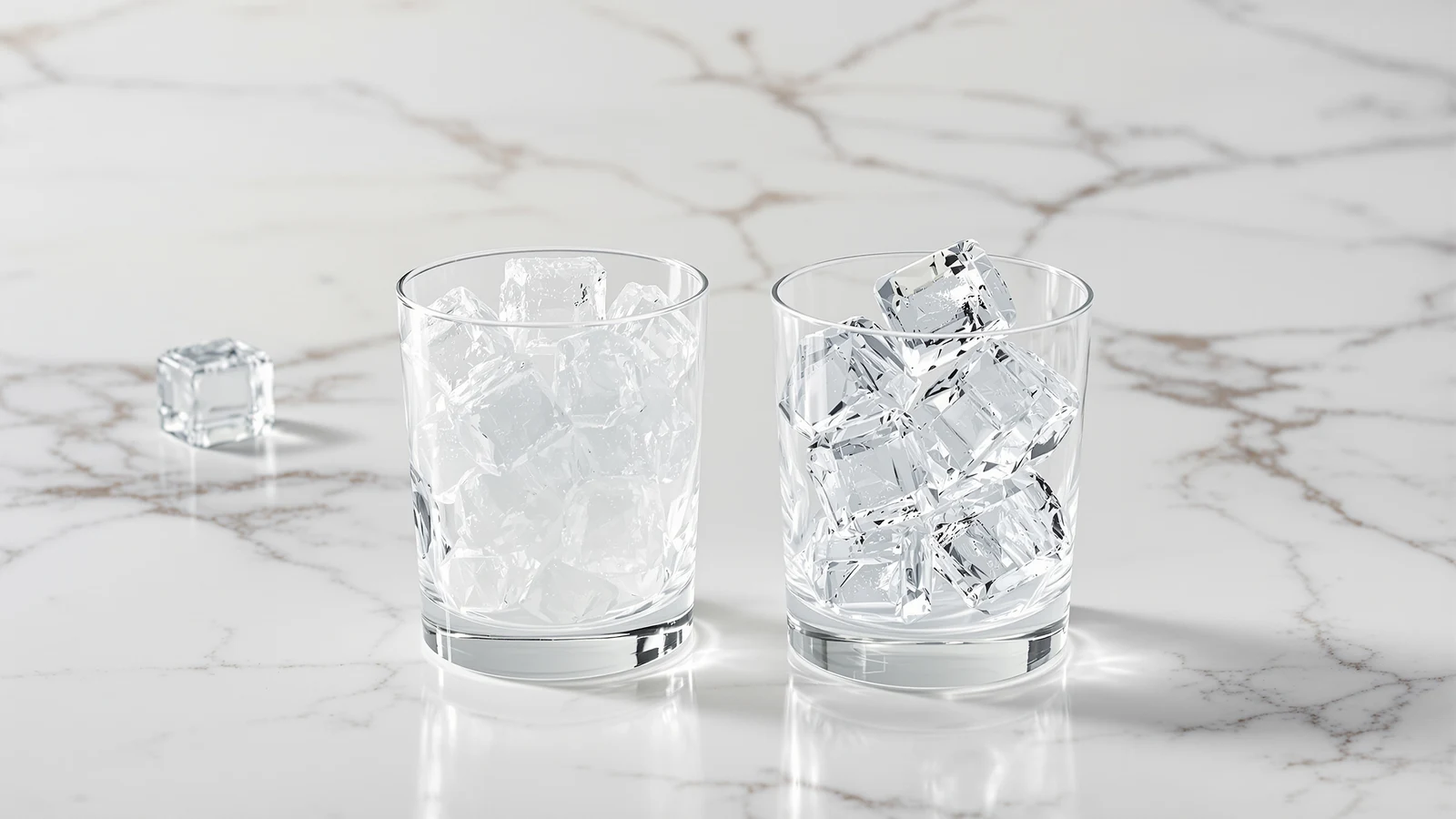
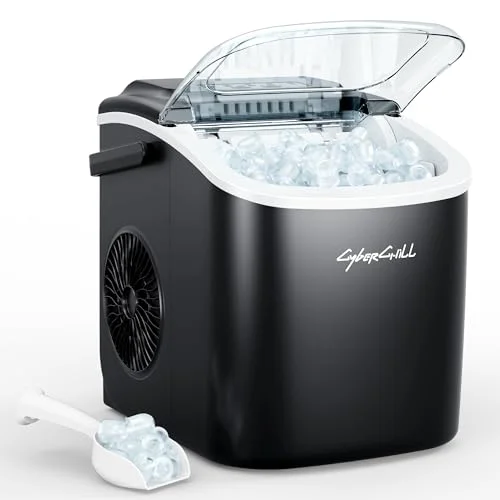
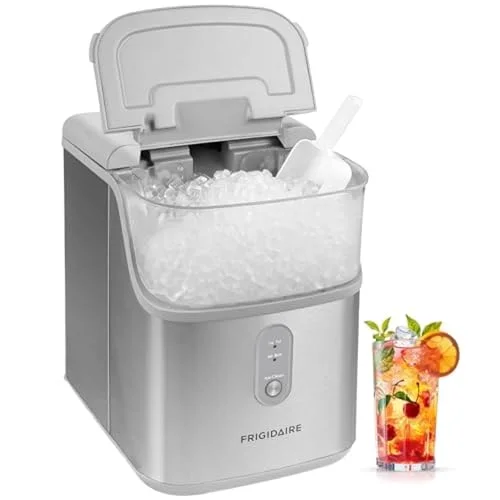
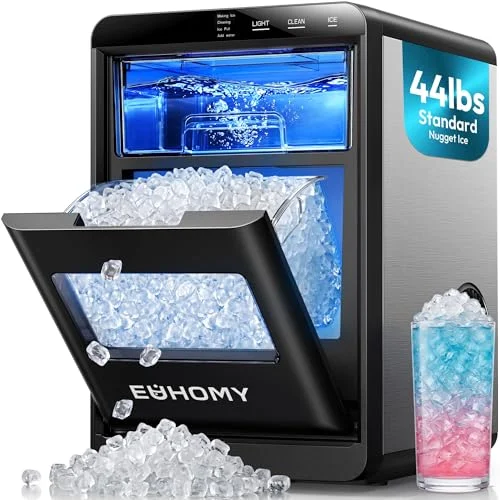
Regular ice is frozen in a mould, as one contiguous block of solid water. A countertop nugget ice maker does something different: it freezes a thin layer of ice on a chilled drum or auger, shaves it off in small flakes, and then compacts those flakes under pressure into the soft, chewable nugget you actually see in the glass. The result looks solid, but it isn’t a single block — it’s thousands of small ice flakes pressed together, with microscopic pockets of air and surface between them that a cube simply doesn’t have.
That one manufacturing difference is the entire explanation for everything the rest of this page covers. More exposed surface area touching the drink means heat moves out of the liquid faster, which is why nugget ice chills things quickly. The same exposed surface area touching the liquid means water moves into the drink faster too, which is why it melts and dilutes quickly. And the same porous, flake-based structure that makes it soft enough to chew is what lets it soak up more of whatever it’s sitting in. Chilling speed, dilution speed and flavour absorption are not three different features of nugget ice. They are the same surface-area property, described three times. The machines that produce it recirculate the same water continuously to keep making more of it, which is also why regular descaling matters on a countertop unit in a way it never does for a plastic cube tray in a freezer.