Best Nugget Ice Makers
Home Bar Buying Guide · Countertop Nugget Ice Makers

A bar doesn't sip ice. It spends it, all at once.

A kitchen counter asks a nugget ice maker to keep up with a few drinks spread across a day. A home bar asks it to survive a two-hour rush, then sit idle until the next one. Those are different jobs, and the spec that wins the first one — a big daily number — tells you almost nothing about the second. We compared the published hourly rates, tank sizes and bin behaviour of three countertop machines built for exactly that kind of burst demand.

By Ilane Tall3 picks comparedResearch-based — no testing lab, no invented scores

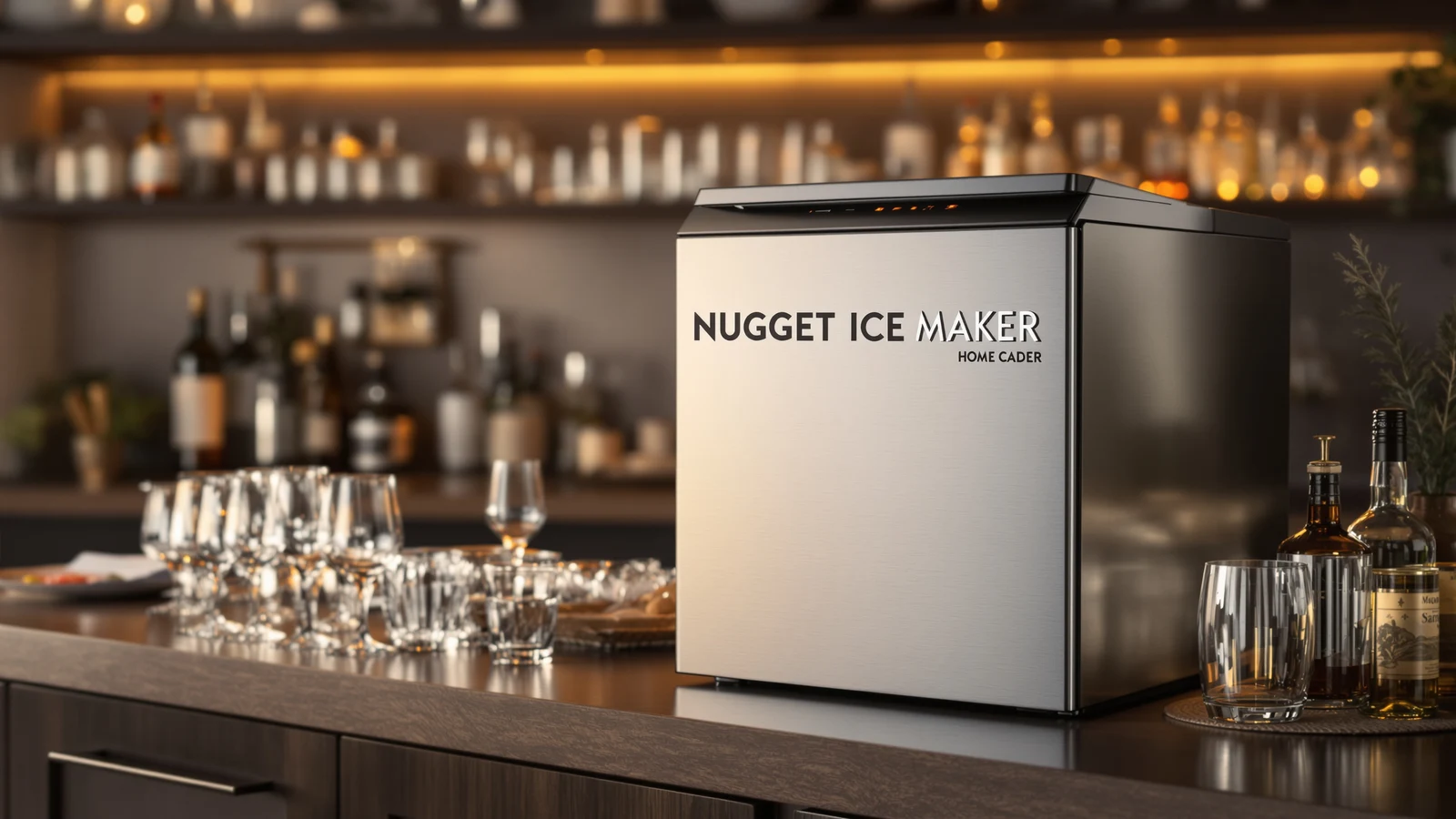
Stainless-steel countertop nugget ice maker on a dark home bar counter beside glasses filled with soft chewable ice
Affiliate disclosure: we may earn a commission if you buy through the Amazon links on this page, at no extra cost to you. See how we picked below.

Most nugget ice maker shopping advice is written for a kitchen counter, where the question is simple: does this keep a couple of water bottles and a few glasses of iced coffee stocked across an ordinary day? A home bar is a different pattern of demand. For hours, nobody touches it. Then six people arrive, someone starts mixing drinks back to back, and the machine is asked to produce faster than it can refill its own bin — for twenty minutes straight, not spread gently across twenty-four hours.

That mismatch is why the daily-output number printed on every listing — 44 lbs, 60 lbs, whatever it is — is the least useful figure for this specific use case, and also the one every spec sheet leads with. A bar doesn't care what a machine can make across a full day it will never run unattended for. It cares what the machine can make in the next hour, how much water is already in the tank when the first order comes in, and how fast a bin that looked full an hour ago is already running low. We compared three countertop machines against those questions specifically, using only what their listings and prior published specifications on this site actually state.

The real demand curve

Burst demand is not the same problem as continuous demand

Every nugget ice maker spec sheet is written as if demand were flat: so many pounds across twenty-four hours, evenly spread. A refrigerator's icemaker is actually used that way — a few cubes at a time, all day, nobody waiting. A home bar during a party is the opposite shape. Demand is near zero for hours, then spikes hard for an hour or two while people order drinks, then drops back to near zero once the last guest leaves. The machine has to be ready for the spike, not the daily average.

This matters because a machine can post an impressive daily number and still struggle during a spike, if that number depends on constant operation across a full day rather than concentrated production in a short window. Nothing in a standard spec sheet tells you how a machine behaves under a burst, because nobody tests for it — including us; we don't run a physical testing lab, and we're not going to pretend a burst-demand score exists when manufacturers don't publish one. What we can do is read the numbers that are published — hourly rate, tank volume, bin size, cycle time — and reason from them about which machine is built for a concentrated rush rather than a slow trickle.

The three machines compared here were chosen because each publishes at least one of those burst-relevant specifications directly, rather than leaving you with only a daily total.

The number that matters

Hourly rate, not daily total, is what a bar actually runs on

Take the headline number off any of these listings and divide it by twenty-four, and you get a theoretical average hourly rate — useful as a sanity check, but not the same thing as a manufacturer stating an hourly figure. Silonn's 44-lbs-per-24-hours claim works out to roughly 1.8 lbs an hour if production ran constantly all day; GoveeLife's 60-lbs-daily figure for the Smart Nugget Ice Maker Pro averages to about 2.5 lbs an hour on the same arithmetic. Those are our calculations from the published daily figure, not a number either brand prints directly, and we're saying so rather than passing off division as a spec.

GE is the exception, and a meaningful one: GE states the Opal Ultra's output as both a daily figure (38 lbs) and an hourly one (1.6 lbs an hour) directly, rather than leaving you to do the arithmetic. That's the manufacturer's own claim about sustained output during an hour of continuous use, which is closer to what a party actually asks a machine to do. It's also a lower number than the simple daily average of the other two, which is itself informative: a lower stated hourly rate paired with the lowest daily total of the three suggests GE is reporting real sustained throughput rather than a best-case burst figure.

The practical takeaway: don't rank these three machines by the biggest number on the box. Rank them by what a machine can plausibly produce in the one or two hours that matter, using the manufacturer's own hourly claim where one exists, and treating a daily total divided by 24 as a rough average rather than a guarantee.

Between refills

How long a full tank actually runs before someone has to refill it

At a party, nobody wants to be the person who has to step away from the bar, find a jug, and refill a reservoir mid-rush. The number that predicts whether that happens is tank volume translated into running time, not daily output. Silonn's model here ships with a 3-litre removable tank, and the published figure for it is up to seven and a half hours of continuous ice making on a single fill — comfortably covering a party that runs from early evening past midnight. It also includes a 12-hour timer, so you can set it to start before guests arrive and have the bin already stocked rather than starting from empty.

GE's Opal Ultra takes a different approach: a 1-gallon XL side tank that detaches for filling, which GE states produces up to three times more ice before a refill than its own standard-size machines. GE doesn't publish an exact hours-of-runtime figure for that side tank the way Silonn does for its reservoir, so we won't invent one — what's confirmed is the comparative claim against GE's smaller tanks, and a gallon is, by simple volume, more water in reserve than Silonn's 3 litres (roughly 0.8 gallons).

GoveeLife's listing for the Smart Nugget Ice Maker Pro leads with the 60-lbs daily figure and a 6-minute cycle to first ice, but it doesn't state a tank volume or an unattended-runtime figure in the data we have. That's a real gap if continuous runtime is your deciding factor, and the honest answer is to check the current listing's own specification table for tank capacity before counting on it running all night unattended.

The bin isn't storage

Why the bin empties faster than the daily number suggests

This is the detail that catches people off guard at their first party with one of these machines: the bin that looked full an hour ago is suddenly running low, even though the machine has been running the whole time. The reason is structural, not a malfunction. Nugget ice is soft, compacted flakes, not a frozen block, and the bin on a countertop machine is not a freezer compartment. Ice that sits in the bin slowly melts back into the reservoir and gets remade, which is how every countertop nugget maker on the market works, including all three compared here. A bin that holds a few pounds of standing ice is a buffer the machine keeps topped up while it runs, not a stockpile you can bank hours ahead of a party and expect to still be full and frozen solid when guests arrive.

At a party, two things accelerate that effect. First, scooping ice repeatedly for drinks removes exactly the ice that was about to melt and get remade anyway, so the bin drains faster than the passive melt rate alone would predict. Second, an open lid during heavy use and a warmer room full of people both raise the ambient temperature the ice sits in, speeding up the melt side of that melt-and-remake cycle. Neither effect means the machine is broken; it means the bin was never meant to be read as "X pounds in reserve" the way a bag of store ice is.

The practical implication: don't run the machine for an hour before the party and assume the bin is "charged." Start it well before guests arrive and keep it running throughout, so the reservoir stays full and production never stops, rather than treating the bin as a battery you top up once and walk away from.

Side by side

The three, compared

ModelBest forDaily outputTank / runtimePriceGet it
Silonn 44 lbs with 3L Tank Longest unattended party 44 lbs/24h 3L tank, ~7.5 hrs, 12-hr timer $218.45 Get it
GoveeLife Smart Nugget Ice Maker Pro Fastest first batch, quietest 60 lbs/day Not stated — check listing $349.99 Get it
GE Profile Opal Ultra Honest hourly rate, biggest tank 38 lbs/day (1.6 lbs/hr) 1-gal XL side tank $499.00 Get it
The picks

Our picks, and who each one is for

01Longest party

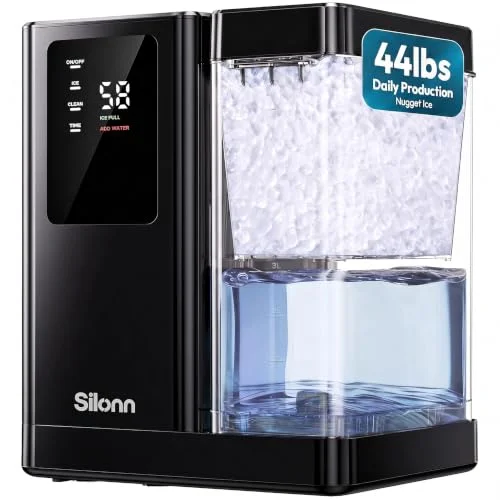
Silonn Nugget Ice Maker 44 lbs with 3L Removable Tank

Best for a party that runs for hours without anyone at the tank

44 lbs/24h·3L removable tank·12-hour timer·First ice in 5 minutes, CLEAN cycle

Silonn states that one full 3-litre tank supports up to seven and a half hours of continuous ice making — a direct runtime claim, not a daily total you have to translate yourself. Fill it before guests arrive and it can run through an entire evening without a second trip to the sink. The 12-hour timer lets you schedule a start time so the bin is already stocked before the first drink is poured. The tank detaches fully for filling and cleaning, with a self-clean cycle on a button for the morning after.

The only one of the three with a published hours-of-runtime figure. For a party, that is the spec that matters most.

Silonn nugget ice maker with removable 3-litre tank
Price
$218.45
Check price →
02Fastest, quietest

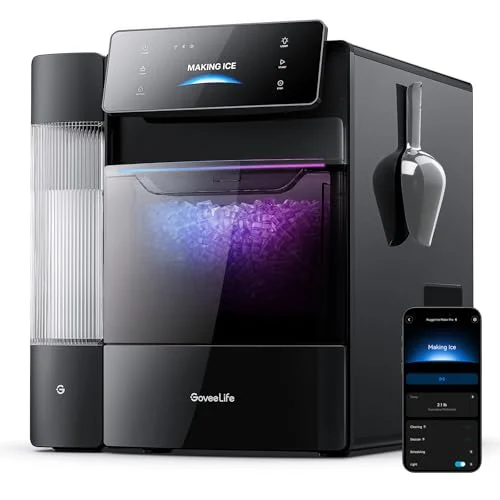
GoveeLife Smart Nugget Ice Maker Pro

Best for the highest stated daily output and a quiet first batch

60 lbs/day·6-minute first ice·40dB·Smart / app-connected

GoveeLife's listing states the highest daily figure of the three at 60 lbs, and a 6-minute cycle to first ice — useful if someone wants a drink the moment the party starts. The stated 40dB noise level matters for a bar near conversation, where a loud compressor competes with the music; 40dB is in the range of a quiet library, on paper. The listing doesn't give us a tank volume or an unattended-runtime figure, so we won't claim this one can run all night on a single fill the way we can for the Silonn — check the current listing's specification table before you plan around it.

The biggest daily number and the quietest stated operation. The runtime-between-fills question is one you'll need to check yourself.

GoveeLife Smart Nugget Ice Maker Pro
Price
$349.99
Check price →
03Biggest tank, honest rate

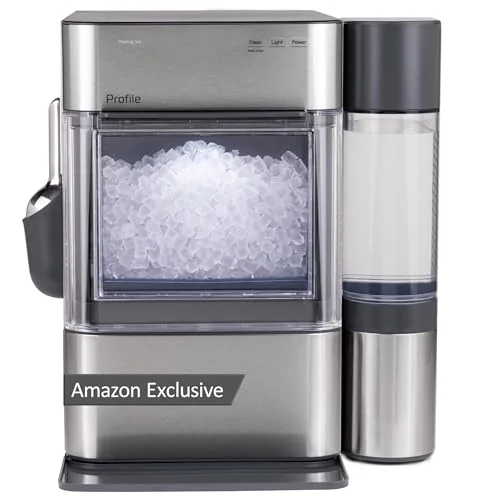
GE Profile Opal Ultra

Best for the largest single-fill reservoir and a genuinely stated hourly rate

38 lbs/day · 1.6 lbs/hour·1-gallon XL side tank·WiFi, stainless steel, Amazon Exclusive

The Opal Ultra is the one machine here where GE states an hourly production rate directly, 1.6 lbs an hour, rather than leaving you to divide a daily total by 24. That's a smaller number than the arithmetic average on the other two, and we think that's a point in its favour: it reads as GE reporting real sustained output rather than a best-case figure. The 1-gallon XL side tank is simply more water in reserve than Silonn's 3 litres by volume, and it detaches for filling and cleaning. It's the most expensive machine of the three by a wide margin, and that premium buys tank size and a conservative hourly claim — not a bigger daily number, which is actually the lowest of the three.

The most expensive pick, and the only one that tells you its real hourly rate instead of making you calculate one.

GE Profile Opal Ultra countertop nugget ice maker with side tank
Price
$499.00
Check price →
The cheap trick

Make ice ahead of time, and let your freezer do the storing

Because the bin on every one of these machines is a buffer, not a stockpile, the single cheapest way to guarantee enough ice for a party costs nothing extra: run the machine for a few hours the day before, and transfer the ice it makes into a bag or container in your freezer. A chest freezer, a standard kitchen freezer, even a dorm fridge's freezer compartment — anywhere holding a steady sub-freezing temperature will keep nugget ice frozen solid and ready, which the machine's own bin will not do, since the bin is built to recirculate meltwater rather than hold a stable deep-freeze temperature.

This turns the burst-demand problem around. Instead of asking a single machine to out-produce a room full of thirsty guests in real time, you let it work during the slow hours when nobody's watching the clock, and bank the result where it will actually stay frozen. On the night itself, the machine still runs continuously to keep the bin topped up for serving, but the freezer stash is insurance against the twenty-minute rush right after everyone arrives, when demand briefly outpaces anything one countertop unit can produce.

It works with any of the three machines above, and works best with whichever one you already own: a lower-output machine that's been filling a freezer bag for two days beforehand will out-supply a higher-output machine making ice for the first time as the doorbell rings. The spec sheet matters for buying the machine. A freezer bag made the day before matters more for getting through the party.

Our method

How we picked — and what we can’t tell you

What we did

Specs and prices, read for burst demand specifically

We compared the published daily output, hourly rate where stated, tank volume, cycle time and current Amazon price for three countertop nugget ice makers, read specifically for how each one handles a short, concentrated rush rather than a flat daily average. Where a brand states a figure directly — GE's 1.6 lbs/hour, Silonn's roughly seven-and-a-half-hour tank runtime — we report it as theirs. Where we had to divide a daily total by 24 ourselves to get a comparable hourly figure, we say so, because that arithmetic is not the same thing as a manufacturer's own claim.

What we didn’t

We don’t run a testing lab

We do not physically test these machines, we do not own them, and we do not publish invented scores or a "party performance" rating of our own devising — no manufacturer publishes one, and we're not going to fabricate one just because it would be convenient for a home-bar guide. We also don't have a published tank volume for the GoveeLife model in the data we're working from, and we say that plainly rather than estimate one from its daily figure.

FAQ

Common questions

Is daily output or hourly rate more important for a home bar?

Hourly rate, or something close to it, is the more useful number for a bar specifically, because a party creates a short burst of demand rather than a flat demand spread across a full day. GE states an hourly figure directly for the Opal Ultra, 1.6 lbs an hour; for the other two machines compared here, the hourly number is our own calculation from the published daily total divided by 24, which is a rough average rather than a guaranteed sustained rate. Either way, it tells you more about surviving a two-hour rush than the daily total printed in bold on the listing.

How long will a full tank last during a party?

It depends on the tank, and not every listing states this directly. Silonn publishes a figure for its 3-litre tank: up to seven and a half hours of continuous ice making on one fill, which comfortably covers a typical evening party. GE's Opal Ultra has a larger 1-gallon side tank but doesn't publish an exact hours figure for it, only that it makes up to three times more ice before a refill than GE's standard-size machines. GoveeLife's listing for the Smart Nugget Ice Maker Pro doesn't state a tank volume in the data we have, so check the current listing before counting on all-night unattended runtime.

Why does the bin seem to run out faster than the daily rating suggests?

Because the bin is a buffer that's constantly melting and being remade, not frozen storage you can bank hours ahead of time. Nugget ice is soft, compacted flakes rather than a solid block, and it melts back into the reservoir to be remade on every countertop machine in this category. Scooping ice repeatedly during a party removes ice that was about to melt anyway, and a room full of people and an open bin lid both speed up that melt cycle, so the bin drains faster during a rush than it would sitting untouched on a kitchen counter.

What's the cheapest way to make sure there's enough ice for a party?

Run the machine for a few hours the day before and move the ice it makes into your freezer, where it will actually stay frozen solid — something the machine's own bin is not designed to do, since the bin recirculates meltwater rather than holding a stable deep-freeze temperature. On the night of the party, keep the machine running continuously to restock the bin for serving, and treat the freezer stash as backup for the first rush when demand briefly outpaces what any single countertop unit can produce in real time.