Best Nugget Ice Makers
Honest Take · Countertop Nugget Ice Makers

Divide the price by the pounds per day. The shelf-tag ranking disappears.

Every listing in this category prints pounds per day in bold, right next to the price, as if the two numbers had nothing to do with each other. They do. Divide one by the other and you get a dollar figure for a single pound of rated daily capacity — and across the three machines in this piece, that number tells a completely different story than the price tags do on their own.

By Ilane TallUpdated November 8, 2026Research-based — no testing lab, no invented scores

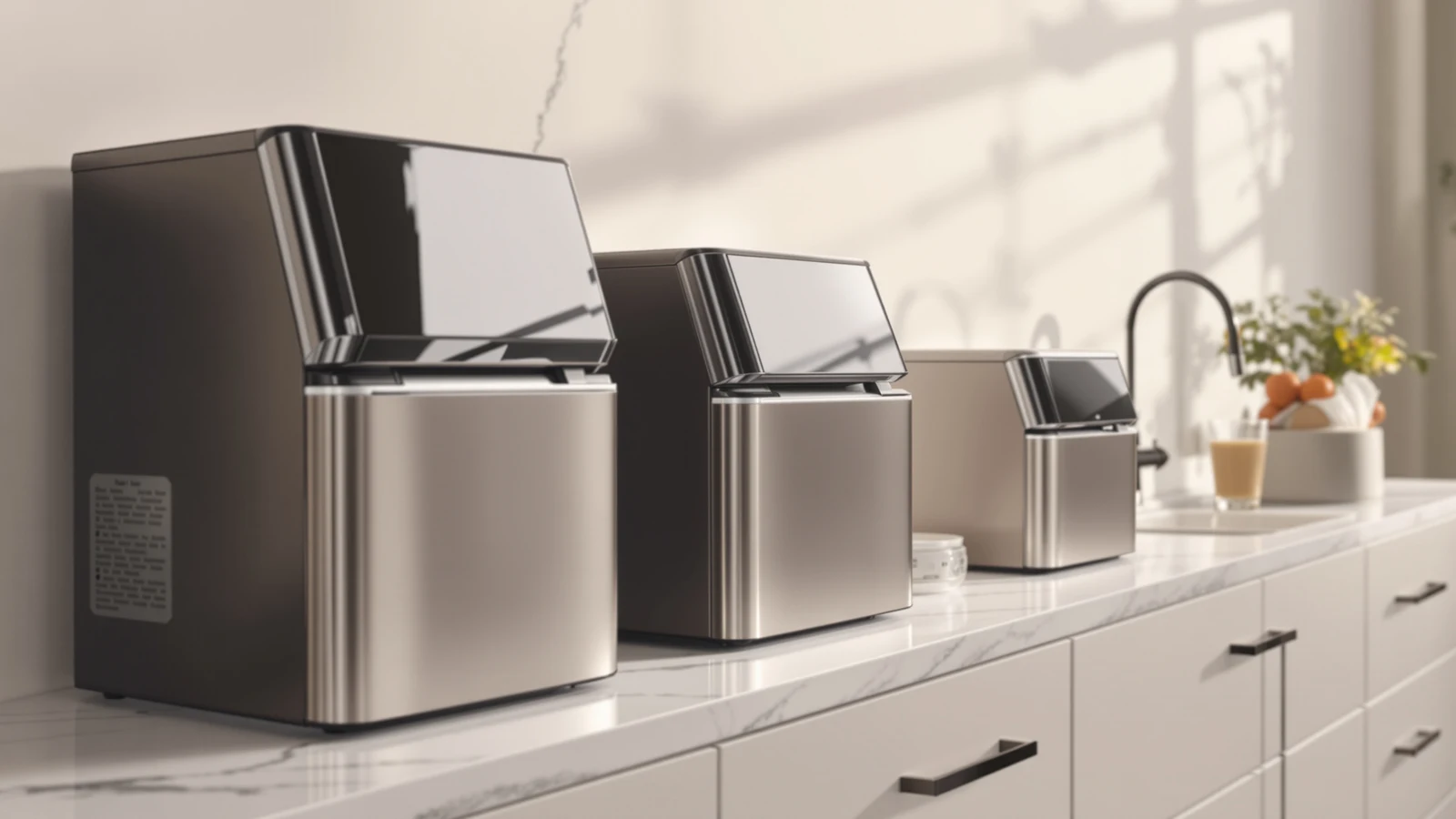
Three countertop nugget ice makers of different sizes lined up on a kitchen counter next to a calculator and a glass of soft chewable ice
Affiliate disclosure: we may earn a commission if you buy through the Amazon links on this page, at no extra cost to you. See how we compared below.

By Ilane Tall · Updated November 8, 2026 · Research-based.

Pounds per day is the number every nugget ice maker listing leads with, because it's the easiest thing to put in bold at the top of a page. Thirty-eight. Forty-four. Sixty. It reads like a ranking on its own — bigger number, better machine — and most shoppers compare it the way they'd compare megapixels or horsepower, without putting it next to the price attached to it. Pounds per day tells you what a manufacturer says the machine can produce under ideal, continuously-topped-up conditions. It tells you nothing about what you paid for each of those pounds.

The fix is one division problem: take the price, divide it by the stated daily output, and you get a dollar amount per pound of rated capacity per day — the same logic as unit pricing on a grocery shelf, applied to an appliance spec instead of a bag of rice. We ran that arithmetic on three countertop machines whose prices span from $69.99 to $349.99 and whose stated daily output spans from 38 lbs to 60 lbs. The result isn't a subtle shift. It's close to a complete reversal of what the sticker prices and the output numbers suggest on their own, and it's worth walking through exactly why.

The first problem

Why daily output and purchase price don't rank the same way

It would be convenient if a bigger stated daily output always meant a bigger price tag, in roughly the same proportion, so either number told you most of what you needed to know. They don't, and this catalogue is a clean illustration of why. The CyberChill Nugget Ice Maker (ASIN B0GZNZ8KJV) is rated at 44 lbs per day and costs $69.99. The EUHOMY Nugget Ice Maker with Handle (ASIN B0G3Q4Y676) is rated lower, at 38 lbs per day, and costs $161.40 — 72% more money for a machine rated to make less ice per day, not more. The GoveeLife Smart Nugget Ice Maker Pro (ASIN B0FK9ZD1GR) tops the output chart at 60 lbs a day and costs $349.99, more than seven times the CyberChill's price for roughly 36% more rated capacity.

None of that is irrational on the manufacturer's side. Price reflects things that have nothing to do with the daily-output number: the compressor, control electronics, WiFi connectivity, finish, brand overhead, included accessories. Output capacity is one input into the cost of building the machine, not the whole cost. The mistake is on the shopping side, when a buyer treats pounds-per-day as the entire value proposition and assumes price simply follows it in a straight line. It doesn't, and the only way to see how far it's drifted is to put both numbers in the same equation instead of scanning them separately.

The arithmetic

Price divided by stated capacity, and what that number leaves out

The formula is deliberately plain: take the current price, divide it by the manufacturer's stated pounds-per-day figure, and the result is a dollar cost for one pound of rated daily ice-making capacity — not a cost per pound of ice you'll actually scoop out of the bin, but a cost per pound of the advertised ceiling printed on the box. For the CyberChill, $69.99 divided by 44 lbs comes out to roughly $1.59 per pound of rated capacity. For the EUHOMY, $161.40 divided by 38 lbs is about $3.17 per pound. For the GoveeLife, $349.99 divided by 60 lbs works out to roughly $8.33 per pound — over five times what the cheapest machine here costs for the identical unit of rated output.

What this number leaves out matters as much as what it captures. A pounds-per-day rating, as we cover in more detail in how many pounds of ice a day you actually need, assumes the reservoir stays topped up for 24 hours, which almost nobody's kitchen use looks like. It's also self-reported by the manufacturer, not independently verified, and like every countertop nugget machine, none of these three store ice frozen solid — the bin holds compacted flakes that melt back into the reservoir and get remade continuously. Treat the result as directionally honest, not as a guarantee of what a pound of ice actually costs to make at home.

What changes

By output alone, the priciest machine wins. By cost per pound, it finishes last

Rank these three machines by stated daily output alone, the way most shoppers skim a listing, and the GoveeLife looks like the clear winner: 60 lbs a day against 44 for the CyberChill and 38 for the EUHOMY. Price alone ranks them differently again: CyberChill cheapest, EUHOMY in the middle, GoveeLife most expensive by a wide margin. Neither ranking agrees with the other, and neither one is the number that actually matters to a buyer trying to compare value.

Divide one by the other and both of those rankings collapse into a single, consistent order, and it isn't flattering to the machine that looked most capable. By cost per pound of rated capacity, the CyberChill is the clear best value at roughly $1.59 per pound. The EUHOMY sits in the middle at about $3.17. The GoveeLife, the machine with the single biggest number on the spec sheet, is the worst value of the three by a wide margin at roughly $8.33 per pound — more than five times the CyberChill's figure. The sticker price gap between the cheapest and most expensive machine here is about 7.1x; the extra rated capacity the GoveeLife offers narrows that to roughly 5.2x per pound, still wide enough that "more capacity" doesn't explain the price difference on its own.

The budget machine, revisited

The cheapest machine in the catalogue is also the best value by this math

The CyberChill Nugget Ice Makers Countertop is the least expensive machine we're comparing at $69.99, marketed under a slightly different name for the same category of ice — a "Pebble Ice Machine" rather than the "nugget" terminology most competitors use — with a stated 44 lbs per day output that puts it in the same bracket as machines twice its price. A budget price this far below the category average would normally make a buyer wary that something's been cut to hit the number. Here it hasn't: the CyberChill isn't just the cheapest sticker price in this comparison, it's also the best value by the one number that adjusts for what you actually get, at roughly $1.59 per pound against $3.17 and $8.33 for the other two.

That's a genuinely useful data point, and also a limited one. Cost per pound says nothing about build quality or whether the company backing a $69.99 appliance will still answer support emails in two years — a question we look at directly in name-brand machines versus the unfamiliar brands. What the arithmetic does say, cleanly, is that the lowest price here isn't buying a worse ratio of ice to dollars than the pricier options. On this specific measure, the cheap machine isn't the compromise. It's the number to beat.

The premium machine, revisited

The most expensive machine is the worst value by this math — and it still sells

The GoveeLife Smart Nugget Ice Maker Pro is the most expensive machine here at $349.99, more than seven times the CyberChill's price and over four times the EUHOMY's. It also carries the highest stated daily output of the three, at 60 lbs, plus two specifics the other listings don't state at all: ice ready in 6 minutes, and a 40dB noise level. Run the same division and the GoveeLife lands at roughly $8.33 per pound of rated capacity — the worst figure in this comparison, worse even than the EUHOMY's already-weak $3.17.

And yet machines at this price point sell consistently, a pattern that holds for other premium machines too, which is the same question we ask about a different high-priced model in is the GE Profile Opal Ultra worth $549. The reason isn't that buyers are bad at arithmetic. They're optimizing for something cost-per-pound doesn't measure: the 6-minute time to first ice is a real, stated advantage over machines that don't publish a comparable figure, and a 40dB rating matters to anyone running an ice maker in an open kitchen without the compressor dominating the room. A buyer who cares most about those two things isn't being irrational for paying the premium — they're answering a different question than "what does one pound of rated capacity cost."

Side by side

The three, by price per pound of rated capacity

ModelDaily outputPriceCost per lb/dayNotable specGet it
CyberChill Countertop 44 lbs/day $69.99 $1.59 Lowest price in the group Get it
EUHOMY with Handle 38 lbs/day $161.40 $3.17 Lower output than CyberChill, higher price Get it
GoveeLife Smart Pro 60 lbs/day $349.99 $8.33 6-min ice, 40dB — highest output and highest price Get it
The three

Ranked by cost per pound of rated capacity, not by price alone

01Best value, this math

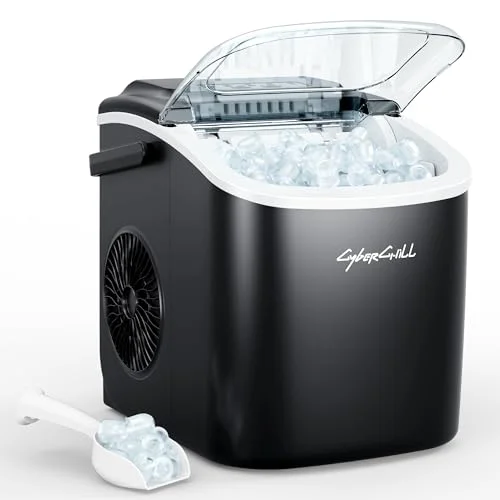
CyberChill Nugget Ice Makers Countertop

Lowest price and the lowest cost per pound of rated capacity

44 lbs/day·$69.99·~$1.59/lb·Marketed as a "Pebble Ice Machine"

Cheapest sticker price in this comparison and, once price is divided by stated output, still the cheapest per pound of rated capacity by a wide margin. No catch in the arithmetic: a lower price and a lower per-pound cost point the same direction here, which isn't always true.

The number to beat is $1.59 a pound. Nothing else here gets close.

CyberChill countertop nugget ice maker
Price
$69.99
Check price →
02Costs more, makes less

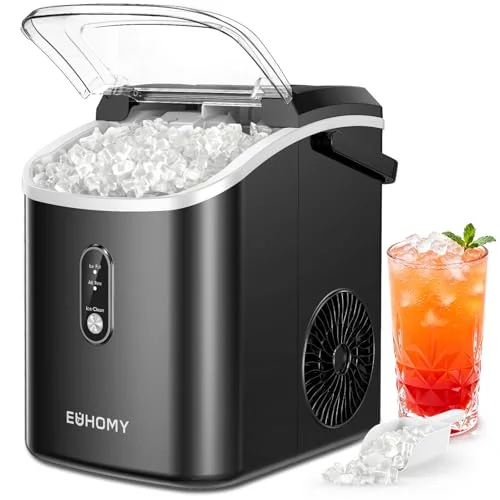
EUHOMY Nugget Ice Maker Countertop with Handle

Higher price and lower rated output than the CyberChill, on both counts

38 lbs/day·$161.40·~$3.17/lb·Sonic Ice branding

Not a straightforward middle ground. The EUHOMY costs 72% more than the CyberChill and is rated to make 6 fewer pounds a day — worse on both numbers that feed the equation. It only looks like a compromise because its price sits between the other two; on cost per pound, it's clearly the weaker of the two lower-priced machines.

More money for less rated output is the actual trade here.

EUHOMY nugget ice maker with handle
Price
$161.40
Check price →
03Worst value, this math

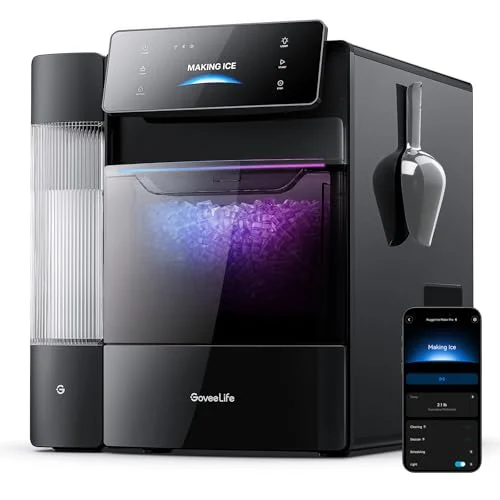
GoveeLife Smart Nugget Ice Maker Pro

Highest rated output, highest price, and the worst cost per pound here

60 lbs/day·$349.99·~$8.33/lb·6-min ice, 40dB

The biggest number on the spec sheet and the smallest value by the measure that adjusts price for capacity. Buyers choosing this over the other two aren't getting a better deal on ice-making capacity — they're paying for the stated 6-minute ice time and 40dB noise figure, specs cost-per-pound ignores entirely.

Worst value on paper. The reasons anyone still buys it aren't in this equation.

GoveeLife Smart Nugget Ice Maker Pro
Price
$349.99
Check price →
The blind spots

What cost per pound doesn't capture: speed, tank size, noise, support

A number this easy to compare has also thrown away most of the information behind the price. Cost per pound answers one question — dollars per pound of advertised daily output — and nothing else. The GoveeLife's stated 6-minute time to first ice is a real advantage this math doesn't touch, because the figure only cares about the ceiling on daily volume, not how fast you reach any ice. Neither the CyberChill nor the EUHOMY listing states a comparable figure, so we can't say which is faster — only that GoveeLife is the one machine willing to put a number on it.

The same is true of noise. GoveeLife states a 40dB rating; we have no equivalent figure for the other two, so we won't guess. If a quiet machine in an open-plan kitchen matters more to you than a cheaper pound of ice, that's a legitimate reason to pay the premium, and cost-per-pound will never tell you that. Tank size is a similar gap: none of the three listings states a water tank volume, so we won't assert one — check each listing directly if reservoir capacity decides your refill frequency.

Brand support is the hardest blind spot to quantify. None of these three names carries the service network of a brand like GE or Frigidaire, a comparison we cover in name-brand versus no-name nugget ice makers. All three brands here are built around online retail rather than a nationwide repair network, so paying more doesn't automatically buy a better warranty experience. A stated feature like a shutoff timer, covered in does a nugget ice maker need a timer, adds cost without adding a pound to the output figure this math is built from — another reason two machines carry different prices for reasons this arithmetic can't explain.
How to actually use this number

Use cost per pound as a tiebreaker, not a decision

None of this is an argument that the CyberChill is simply the correct purchase and the GoveeLife a mistake. It's an argument that cost per pound is a genuinely useful number to calculate, and a genuinely bad number to let decide the purchase on its own. It's most useful when you're choosing between machines that are otherwise close — similar speed claims, similar noise, similar brand support — and the only real difference left is how much ice-making capacity you're getting per dollar. In that narrow comparison, it tells you something the sticker prices alone can't.

It stops being useful the moment the machines differ on anything that matters to you besides raw output: a 6-minute ice time, a 40dB rating, an included timer, a brand with a phone line that answers. Those are real costs with real value behind them, and none show up in a price-divided-by-pounds-per-day calculation. Use it as the last step in a decision, after you've already ruled machines in or out on the features you actually care about — not as the first and only filter. Treat it as a tiebreaker between finalists and it earns its place. Treat it as the whole decision, and you'll buy strictly on the one spec it measures while ignoring every spec that made the price what it is.

Our method

How we compared — and what we can’t tell you

What we did

Price divided by stated daily output

We took the current Amazon price and the manufacturer's own stated pounds-per-day figure for three countertop nugget ice makers, and divided the first by the second to get a dollar cost per pound of rated daily capacity for each. Where a listing stated an additional spec directly — time to first ice, a noise rating — we report it as published. Where a spec such as tank volume isn't stated, we say so rather than estimate one.

What we didn’t

We don’t run a testing lab

We do not physically test these machines, we do not own them, and we have not timed how fast any of them produces ice or measured the sound level ourselves. We have no owner reviews or star ratings for these three ASINs, so none are cited, paraphrased or implied here. What we can do honestly is take the published numbers at face value, run the arithmetic consistently across all three, and be explicit about what that arithmetic leaves out.

FAQ

Common questions

Why isn't the cheapest price always the best value?

Because price alone doesn't account for how much ice a machine is rated to make. A lower price can mean lower capacity too, which cancels out the apparent savings. Here it doesn't: the CyberChill is both the cheapest machine and the one with the lowest cost per pound of rated output, at roughly $1.59 against $3.17 and $8.33 for the other two. That alignment isn't guaranteed, so it's worth checking the arithmetic rather than assuming price alone settles it.

How do you calculate cost per pound of ice-making capacity?

Take the current price and divide it by the manufacturer's stated pounds-per-day figure. For the CyberChill, $69.99 divided by 44 lbs is about $1.59 per pound. For the EUHOMY, $161.40 divided by 38 lbs is about $3.17 per pound. For the GoveeLife, $349.99 divided by 60 lbs is about $8.33 per pound — the same logic as unit pricing on groceries, not a measurement of real-world ice output.

Why does the most expensive machine still sell if it's the worst value by this math?

Because buyers at that price point are usually optimizing for something cost-per-pound doesn't measure. The GoveeLife states a 6-minute time to first ice and a 40dB noise rating, two specifics the cheaper listings don't state. Someone prioritizing speed or a quiet kitchen is paying for those features specifically, not for a better ratio of ice to dollars, so the premium can be reasonable even though it loses badly on cost per pound.

Should I buy based on cost per pound alone?

No — treat it as a tiebreaker, not the whole decision. It's most useful when comparing machines that are already similar on speed, noise, tank size and brand support, where capacity-to-price ratio is the remaining difference. If the machines differ on those other factors, cost per pound won't capture that, and deciding on it alone means ignoring everything that actually explains why the prices differ.