Best Nugget Ice Makers
Buying Guide · Countertop Nugget Ice Makers

A name you already know costs something. The question is what, exactly.

Silonn, EUHOMY, Kismile and CyberChill do not sell anything else you would recognize on a shelf. GE and Frigidaire sell refrigerators, ranges and washers to most of the country. We put a machine from each world side by side at the same job — soft, chewable pellet ice — and compared what the listings actually state, not what the logo implies.

By Ilane Tall3 machines, two brand classesResearch-based — no testing lab, no invented scores

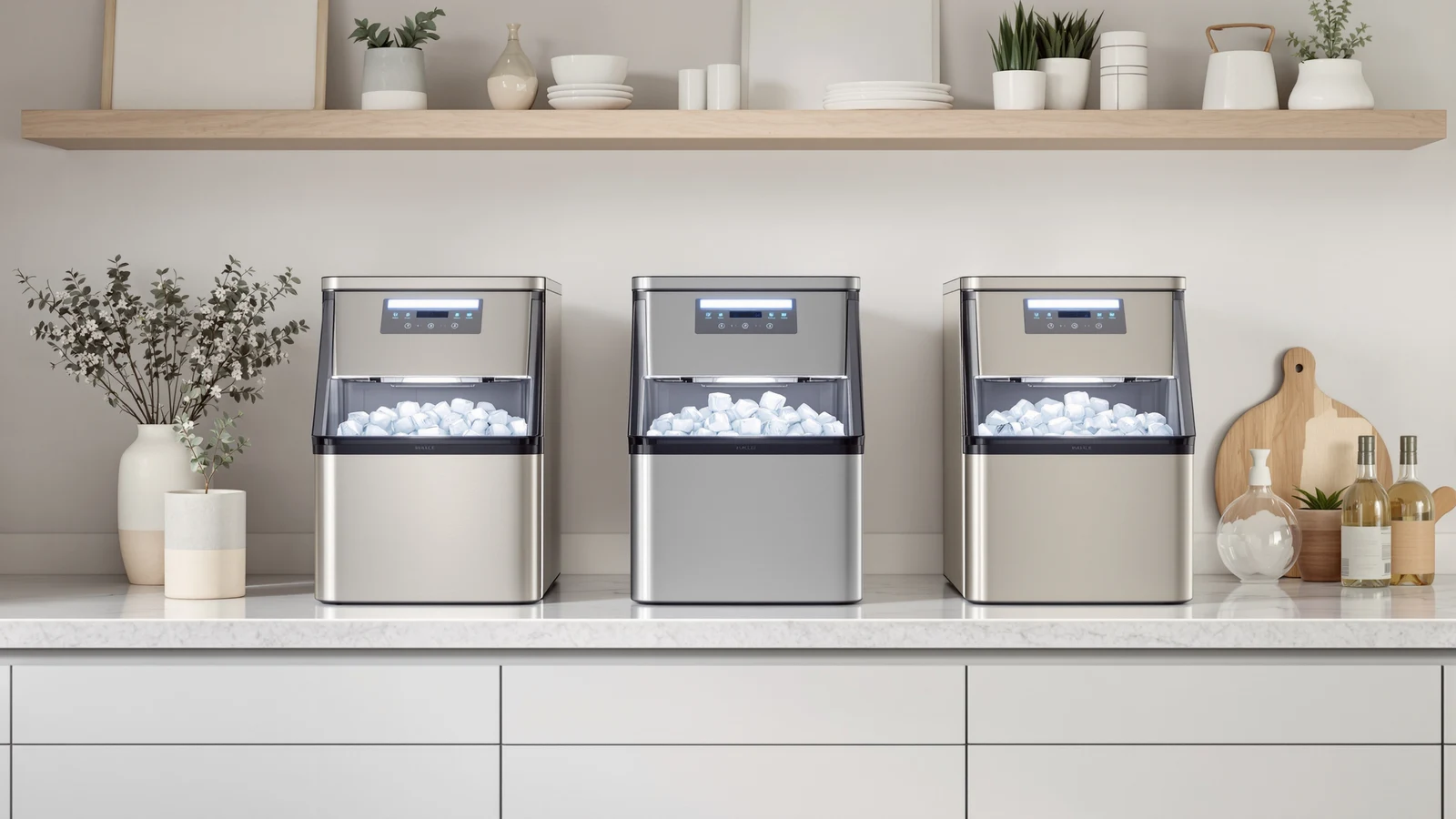
A GE-style stainless countertop nugget ice maker and an unbranded countertop ice maker side by side on a kitchen counter
Affiliate disclosure: we may earn a commission if you buy through the Amazon links on this page, at no extra cost to you. See how we compared below.

Search “nugget ice maker” on Amazon and the results mix two very different kinds of company without telling you which is which. GE Profile and Frigidaire sit next to Silonn, EUHOMY, Kismile and CyberChill, all making the same soft, chewable pellet ice, often with the cheaper, less familiar machine claiming the bigger daily number. It's a fair question to ask directly: what does the name actually buy you at this size of appliance, and where does it buy nothing at all?

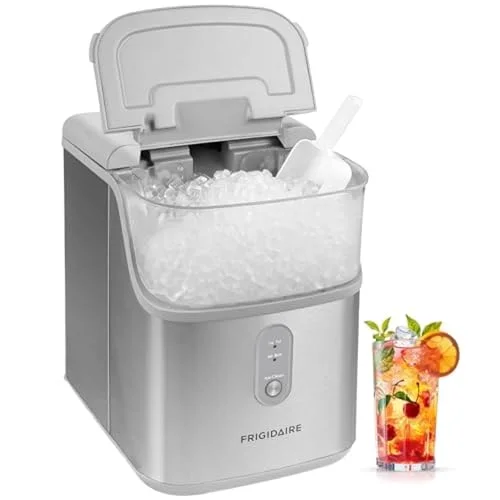
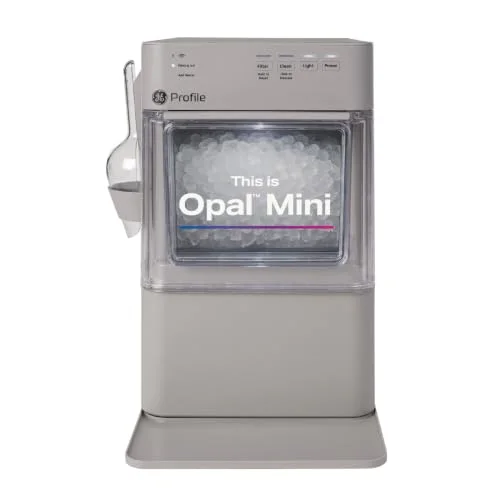
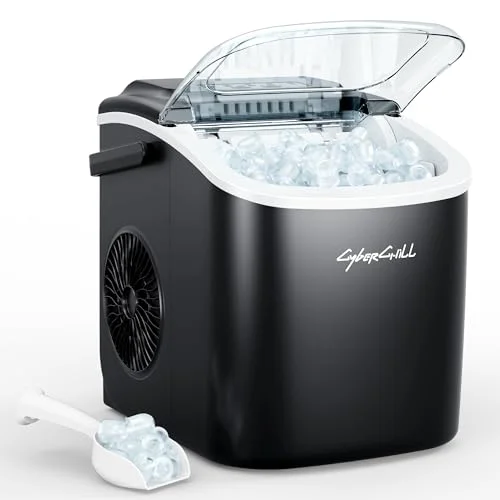
We're answering with three machines rather than guessing in the abstract: the CyberChill Nugget Ice Makers Countertop at $69.99, the Frigidaire Countertop Crunchy Chewable Nugget Ice Maker at $191.33, and the GE Profile Opal Mini at $299.00. GE and Frigidaire are both major US appliance manufacturers whose primary business is refrigerators, ranges and washers sold through national retailers — a matter of public record, not a marketing claim. CyberChill isn't attached to any other recognizable appliance category we could find; as far as we can establish, it exists as a seller name on ice maker listings and little else. That gap — a company you could look up for reasons that have nothing to do with ice, against one you can't — is the actual distinction this guide tests, not a feeling about which logo looks more trustworthy.

First question

What “name brand” means on a $200 countertop box, and what it doesn’t

On a major appliance — a refrigerator, a range, a washer plumbed into a house — a name brand typically buys documented engineering history, a parts supply chain, and an installation and service network. A countertop nugget ice maker is different: it plugs into an outlet, needs no installation, and the mechanism inside — a small compressor, a pump, an auger that compresses ice flakes into pellets — is far simpler. There's less engineering for the brand premium to stand behind, and that shows up in the numbers: the least familiar name in this comparison states the highest daily output.

CyberChill's listing claims 44 lbs per day. Frigidaire's compact model states 33 lbs per day. The GE Profile Opal Mini states 36 lbs per day. If the brand name tracked ice-making capability one-for-one, the order on the box should run GE, then Frigidaire, then CyberChill. It runs the other way. That's the plainest answer to what a name buys here: not a bigger spec-sheet number. The unfamiliar brand's claimed capacity isn't lower because it's unfamiliar — if anything the opposite, since an unestablished seller has every incentive to print the most competitive figure to win the click.

What the name is actually standing in for is something you can't read off a spec sheet at all: a company history that exists independently of this one product. GE and Frigidaire would still be identifiable, searchable, accountable companies if every nugget ice maker they'd ever sold vanished tomorrow. Whether that distinction is worth anything to you is a separate question from capacity, and it's the one the rest of this guide is actually about. (If you want the unfamiliar-brand side of the category compared directly against itself, our Silonn vs EUHOMY comparison covers how two of those names differ from each other.)

Second question

Support, warranty and parts: the real difference, if there is one

Every countertop nugget ice maker sold in the US ships with some form of manufacturer warranty covering the sealed refrigeration system — standard across the category regardless of brand. None of the three listings here state a specific warranty length in the product data we have, so we won't invent one for any of them. What differs isn't the paper the warranty is printed on. It's what stands behind that paper.

GE and Frigidaire are both long-established, publicly documented appliance manufacturers whose core business — refrigerators, ranges, washers — has decades of installed service infrastructure in the US, independent of whether this specific Opal Mini or Frigidaire model ever existed. If a warranty claim on either goes wrong, there is a company with a public track record and a customer-service apparatus built for products far more complex than a countertop ice maker. Our look at GE's pricier Opal Ultra and our comparison of Frigidaire's two nugget ice generations both lean on the same fact: whatever you buy from either brand, you're buying into the same company history, not a one-off.

CyberChill doesn't have an equivalent record we could find. That isn't proof the warranty is worse in practice — we have no data either way, and we won't characterize a company's support quality from a listing page alone. It's narrower: there's no independent track record to check before you buy, the way there is with GE or Frigidaire, and a claim is more likely to run entirely through Amazon's own return process rather than a manufacturer service line. If a documented path to a human matters to you, that's the specific thing a name brand buys here. (Our guide to the sub-$100 tier goes further into what the cheapest listings in this category do and don't commit to in writing.)

Third question

Capacity and features at the same price point, brand aside

Strip the logos off and look only at what each listing states, and the picture doesn't sort neatly by brand familiarity at all.

ModelBrand classDaily outputStated featurePriceGet it
CyberChill Countertop Unfamiliar 44 lbs/day “Pebble Ice Machine” $69.99 Get it
Frigidaire Countertop Name brand 33 lbs/day Compact, metallic finish $191.33 Get it
GE Profile Opal Mini Name brand 36 lbs/day Top-fill, 2-lb bin, descaler & scoop included $299.00 Get it

The lowest stated daily output here, 33 lbs, belongs to the name brand priced in the middle, not the cheapest machine. The highest, 44 lbs, belongs to the brand with no independent track record. Capacity alone does not explain the $230 spread between the cheapest and most expensive machine on this page — a point worth sitting with before you let the biggest number on a listing decide anything. (For more on why the pounds-per-day figure is a weaker signal than it looks, see how many pounds of ice a day you actually need.) What does explain some of the gap is the detail column: the GE Mini's listing commits, in writing, to a top-fill reservoir design, a 2-lb removable bin, and a bundled six-pack of descaler plus a scoop. Neither the CyberChill nor the Frigidaire listing in our data commits to an equivalent level of stated feature detail — which doesn't prove those machines lack those features, only that neither listing is willing to put them in writing the way GE's is.

Fourth question

Where an unfamiliar brand is a real risk, and where it's just a risk to your nerves

It's worth separating two things that get lumped together as “risk” when people talk about buying from a brand they've never heard of. One is real and financial: if the sealed refrigeration system fails with no documented manufacturer support line behind the listing, your recourse narrows to Amazon's own return window, and once that closes you may be holding a dead $70 appliance with nowhere specific to send it. That's a real, if capped, cost — the one legitimate financial argument for paying more for GE or Frigidaire's documented service history, covered above.

The other kind of “risk” is discomfort, and it's worth naming as that rather than dressing it up as a safety concern. Thinner specifications or packaging without a logo you recognize can feel riskier without being riskier mechanically. The core components inside a countertop nugget ice maker — a small compressor, a pump, an auger — come from a narrow pool of manufacturing capability across this whole category, which is one reason daily-output numbers across competing brands tend to cluster. Our Silonn vs EUHOMY comparison covers this directly: brands that may share a base mechanism still differ in what they'll commit to in writing, which is a real signal, just not a mechanical safety gap.

So: the real risk with an unfamiliar brand is what happens after something breaks, not whether it's more likely to break. If you can live with handling a failure yourself through a marketplace return rather than a phone call to a manufacturer, that risk is mostly to your nerves, not your wallet. If you want a documented support path waiting on the other side of a problem, that's the real-dollar risk you buy out of when you pay for GE or Frigidaire.

Fifth question

The $230 gap: what you're actually paying for

$299.00 minus $69.99 is exactly $230, the full distance between the cheapest machine here and the GE Profile Opal Mini. The capacity section above already rules out the simplest explanation: you are not paying $230 for more ice, since the GE Mini's stated 36 lbs/day is lower than CyberChill's stated 44 lbs/day.

What the $230 does buy, based strictly on what each listing states, is everything capacity doesn't explain: GE's documented support history, a top-fill reservoir design stated in the product name, a 2-lb removable bin, a bundled six-pack of descaler and a scoop, and a named finish option (Stone Grey). None of that is the ice-making number — it's the design and the paperwork around it.

The Frigidaire, at $191.33, is the more interesting data point for isolating the brand premium specifically. The jump from CyberChill to Frigidaire is $126.74, and Frigidaire's stated output, 33 lbs, is actually lower than CyberChill's 44 lbs, with no stated top-fill design, bin size or bundled accessory to offset that. Here, almost the entire premium over the cheapest machine is the Frigidaire name and a metallic finish — the cleanest illustration in this comparison of what a name brand sells at this size of appliance: not a better spec sheet, but the company behind it. (The pattern repeats higher up GE's lineup too — see whether the $549 Opal Ultra is worth it over the Mini, the same brand charging itself a further premium for refinement rather than output.)

The three

Where each one actually makes sense

01Cheapest way in

CyberChill Nugget Ice Makers Countertop

Best if the name buys you nothing you'd actually use

44 lbs/day·$69.99·“Pebble Ice Machine”

The highest stated daily output of the three, at under a quarter of the GE Mini's price. What you're accepting in exchange is the gap covered above: no independent company history to check before you buy, no manufacturer service line we could verify, and a warranty you'll most likely exercise, if at all, through Amazon's own return process rather than a dedicated support team. If the spec sheet is genuinely the only thing you weigh, and you're comfortable being your own first line of support, this is the rational pick on paper.

You're buying ice-making capacity and nothing else. For some kitchens, that's a completely fair trade.

CyberChill countertop nugget ice maker
Price
$69.99
Check price →
02The name, mostly

Frigidaire Countertop Crunchy Chewable Nugget Ice Maker

Best if the badge itself is worth more to you than the spec sheet

33 lbs/day·$191.33·Compact, metallic finish

The lowest stated daily output of the three, at nearly triple CyberChill's price, with no stated top-fill design, tank volume or bundled accessory in the data we have to justify the gap on specs alone. What it buys instead is almost entirely the Frigidaire name: a long-established appliance manufacturer with decades of documented service infrastructure, and a metallic finish stated in the listing. Our comparison of Frigidaire's two nugget ice generations is worth reading if you're set on this brand and deciding which of its own models to buy.

You are paying for the company behind the box here, almost in isolation from what's printed on it.

Frigidaire countertop nugget ice maker
Price
$191.33
Check price →
03Name and features together

GE Profile Opal Mini

Best if you want the brand premium backed by stated features, not just the badge

36 lbs/day·$299.00·Top-fill reservoir, 2-lb bin, descaler & scoop included

The most expensive machine here, and the only one of the three where the premium over CyberChill lines up with specific, stated features rather than the name standing alone: a top-fill reservoir design named directly in the product title, a 2-lb removable bin, and a bundled six-pack of descaler with a scoop, on top of GE's documented manufacturer support history. It still doesn't out-claim CyberChill on raw daily output. What it offers is a brand premium you can point to specific, written specifications for, which is the rarer thing in this comparison.

The one machine here where the extra money buys documented features and a documented company, not just one or the other.

GE Profile Opal Mini nugget ice maker
Price
$299.00
Check price →
The decision

The pick, by how much you value a support line over a smaller bill

There isn't one right answer, because the three machines aren't competing on the same axis — they trade capacity, price, documented features and brand history against each other in different proportions, and which trade wins depends on what you're protecting against. Three honest paths through it:

If a support line is worth nothing to you and the number on the box is worth everything: buy the CyberChill. You've already saved the full $230, and that's the entire value proposition — the lowest price for the highest claimed capacity in this group.

If you want a recognizable name specifically, and you're willing to pay for that alone: the Frigidaire is the honest version of that choice, at $191.33 for a machine whose own stated output is the lowest of the three. You're buying the comfort of Frigidaire's history, in close to pure form.

If you want the brand premium backed by something written down: the GE Profile Opal Mini is the only one where the extra money tracks specific, stated features — the top-fill design, the bin, the bundled descaler — alongside the documented company behind them. At $299.00 it's the most expensive machine here, and the one where you can point to exactly what the premium bought.

The rule that falls out of all three paths: the name is worth paying for when you want a documented support history behind the machine, regardless of the spec sheet. It is not, on this evidence, worth paying for as a proxy for capacity — the unfamiliar brand claims more of that than either name brand here. Decide which of those two things you're actually buying before deciding how much of the $230 to spend on it.
Our method

How we compared — and what we can’t tell you

What we did

Listings and public brand history, read side by side

We compared the published product names, stated daily output, stated features and current Amazon prices for one unfamiliar-brand machine and two name-brand machines, then set those figures against publicly documented facts about each manufacturer — specifically, whether GE, Frigidaire and CyberChill have any independently verifiable business or service history outside of this single product category. Where a listing states a spec directly, we report it. Where it doesn't, we say so rather than fill the gap with an assumption that favors either brand class.

What we didn’t

We don’t run a testing lab

We do not physically test these machines, we do not own them, and we do not publish invented scores, ratings or review counts for any of the three. We have no data on actual warranty-claim outcomes for any of these brands, name or unfamiliar, and we're explicit about that rather than guessing which one handles a failed unit better. What we can do honestly is read what each listing and each company's public record actually states, and be clear about exactly where that record runs out.

FAQ

Common questions

Does a name-brand nugget ice maker actually make better ice?

Not according to the daily-output figures these three listings state. CyberChill, the unfamiliar brand in this comparison, claims 44 lbs per day — higher than both the Frigidaire (33 lbs) and the GE Profile Opal Mini (36 lbs). All three machines make the same kind of soft, chewable pellet ice using a similar core mechanism. The name brand premium here is not buying a better-performing machine on the numbers published; it's buying the company standing behind the machine.

What's the real risk of buying an unfamiliar brand like CyberChill?

The real, financial risk is narrow and specific: if the sealed refrigeration system fails and there's no documented manufacturer support line, your recourse is whatever Amazon's own return and refund window allows, and that window eventually closes. We have no independent data suggesting the machine is more likely to fail than a name-brand equivalent — that part is a feeling, not a documented risk. The documented risk is entirely about what happens after something breaks, not whether it's more likely to break in the first place.

Is the Frigidaire worth $127 more than the CyberChill?

Only if the Frigidaire name itself, and the appliance company's documented service history behind it, is worth that much to you — because on stated specs alone, it isn't a clear upgrade. The Frigidaire's stated daily output, 33 lbs, is lower than CyberChill's stated 44 lbs, and neither a top-fill design nor a tank volume is stated for the Frigidaire listing in the data we have. The $126.74 gap between them is, as closely as this comparison can isolate it, close to a pure brand premium.

Why does the GE Profile Opal Mini cost $230 more than the cheapest machine here?

Not for more daily capacity — its stated 36 lbs/day is lower than CyberChill's stated 44 lbs/day. The $230 gap tracks GE's documented manufacturer support history plus a set of specific features stated in the Mini's own listing: a top-fill water reservoir, a 2-lb removable bin, and a bundled six-pack of descaler with a scoop. It's the one machine in this comparison where the brand premium and a written feature list move together, rather than the brand standing alone.