Best Nugget Ice Makers
Honest Take · Countertop Nugget Ice Makers

Is the GE Profile Opal Ultra worth $549?

Three hundred and fifty dollars above the cheapest machine in this category for a side tank and a WiFi app. We put the Opal Ultra's published specs next to the two machines that undercut it the most, line by line, to see what the premium actually buys — and who it's actually for.

By Ilane Tall3 machines comparedResearch-based — no testing lab, no invented scores

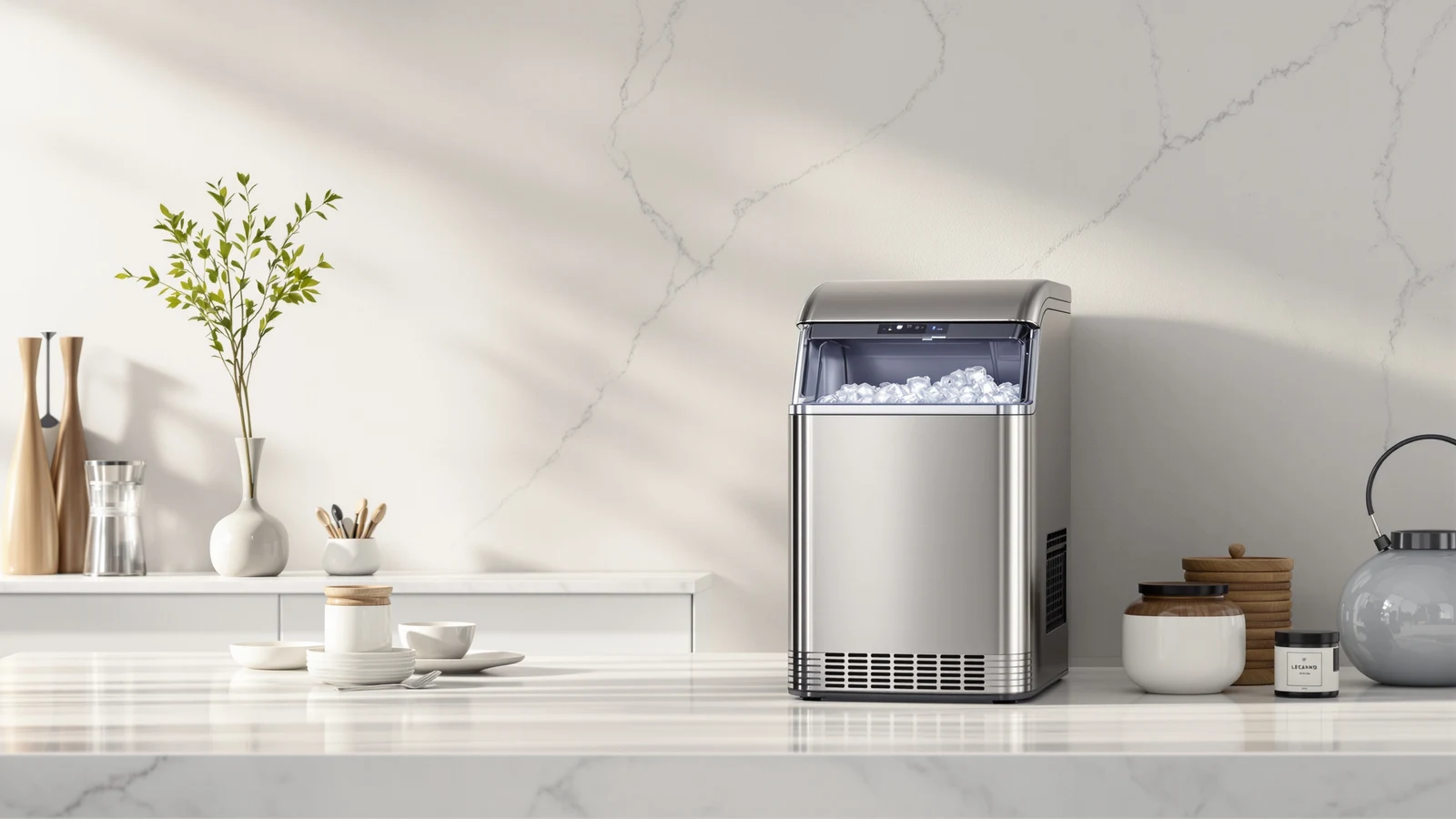
Stainless-steel GE Profile Opal Ultra nugget ice maker with side tank on a kitchen counter next to a glass of chewable ice
Affiliate disclosure: we may earn a commission if you buy through the Amazon links on this page, at no extra cost to you. See how we picked below.

The GE Profile Opal Ultra is currently priced at $499.00, well above most of the countertop nugget ice makers we track, and it sits in a catalogue where a CyberChill machine covers the same basic job — soft, chewable pellet ice, made at home, no plumbing required — for $69.99. That's a $379.01 gap between the cheapest machine we compare it against here and the Ultra, and a reader doing that math has a fair question: what, specifically, does the extra money buy? Not a vibe, not a brand feeling. What feature, in plain terms.

We're not going to answer that with a score out of ten, because we don't run a testing lab and nobody here has three nugget ice makers running side by side in a kitchen for a season. What we can do is read what GE, Kismile and CyberChill each publish about their own machines — tank size, daily output, connectivity, price — and compare those figures honestly against each other. That's the whole method, and it's enough to answer the question that actually matters: is the Ultra's premium buying capability, or is it buying convenience you could do without.

The real feature

The 1-gallon side tank is the one thing that's genuinely hard to find cheaper

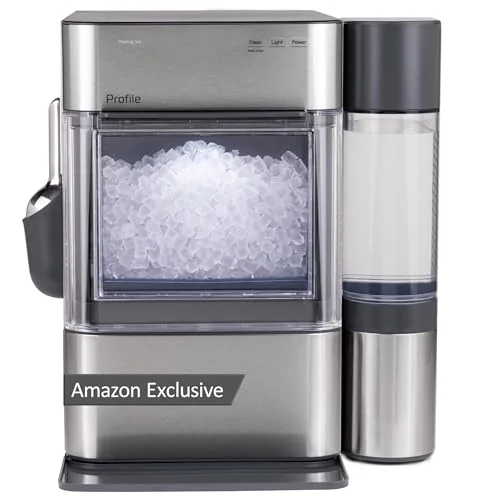
Start with the feature GE actually leads with in the product name: a 1-gallon XL side tank. That's the detail worth taking seriously, because it's not marketing filler — it's a structural difference in how the machine is built, not a software flourish bolted onto a standard unit. A gallon is roughly 3.8 litres, and a side tank that detaches for filling and cleaning means you're not pulling the whole machine forward or wrestling an internal reservoir out of the back every time it runs dry.

Neither of the two machines we're comparing it against publishes a tank volume in the data we have. The Kismile ($137.73) is sold as a 35 lbs/Day stainless steel unit; the CyberChill ($69.99) is sold as a 44lbs Per Day machine. Both state a daily output figure prominently, which is the easiest number to print on a listing title. Neither states how much water its reservoir actually holds, which is the number that governs how often you're back at the machine refilling it. That absence is itself informative: a side tank large enough to be named in the product title, at a stated gallon capacity, is a real and currently rare spec in this price range, not something you can assume you're getting from a cheaper machine's silence on the subject.

So if what frustrates you about nugget ice makers is the refilling — not the ice itself, which every machine here makes from the same basic mechanism — the side tank is a legitimate, checkable reason to pay more. It is the part of the Ultra's premium that isn't just marketing.

The soft feature

WiFi and app control: convenience, not capability

The Ultra is also sold as a WiFi Stainless Steel machine, and that's the second headline feature after the tank. It's worth being precise about what that buys, because it's a different kind of upgrade than the tank is. A gallon side tank changes how much water the machine holds and how often you touch it. WiFi control changes nothing about the ice itself — the machine still produces the same soft, chewable pellet ice through the same compressor-and-auger mechanism as every other countertop nugget maker. What connectivity adds is the ability to start a batch, or check on one, from your phone instead of walking to the kitchen and pressing a button.

That's a real convenience for some households and a genuinely irrelevant one for others. If the machine lives three steps from where you're already standing when you want ice, an app adds a screen between you and a button you could just press. If it's tucked in a wet bar, a garage fridge nook, or anywhere you're not reliably near, being able to start a cycle remotely so it's ready when you get there has actual value. Neither CyberChill nor Kismile advertises app connectivity in the specifications we have, so this is a feature unique to the Ultra among these three — but it's reasonable to treat it as the part of the $449 price that's paying for polish, not for making better or more ice.

The number that surprises people

38 lbs a day against 44 — the flagship isn't even the biggest number

Here's the detail that undercuts the simplest version of "you get what you pay for": the Opal Ultra's stated daily output is 38 lbs/Day. The $69.99 CyberChill in this comparison states 44lbs Per Day — a higher number, at roughly a sixth of the price. If you read a nugget ice maker's listing the way most shoppers do, scanning for the bold pounds-per-day figure in the title, the cheapest machine here wins on paper.

We'd treat both figures with the same mild scepticism, because a daily-output number assumes a reservoir kept topped up continuously for twenty-four hours, which nobody actually does, and because we have no independent way to verify either manufacturer's claim beyond what's printed on the listing. But taking both numbers exactly as published, the Ultra is not the biggest machine in this comparison, or even the biggest in our broader catalogue. It's priced like the most capable option and specs like a mid-pack one. What it's actually optimized for is the two things covered above — tank size and connectivity — not raw daily throughput. If pounds-per-day is the number you're shopping on, the Ultra is the wrong machine to pay a premium for.

What we can't tell you

What "build quality" claims mean when nobody publishes a rating

A $449 price tag invites an assumption: that it must be better built than a $69.99 one, because why else would anyone pay the difference. Maybe. We don't have star ratings or review counts for any of the three machines in this comparison, and we're not going to paraphrase invented owner sentiment to fill that gap — no "owners report," no "reviewers note," because we have no review data behind either phrase for these ASINs. Amazon's listings for all three products here simply don't carry that data.

What we can say is narrower and more useful: GE is a large appliance manufacturer with a service and parts network behind its name, which is a real, checkable fact distinct from a star rating. Kismile and CyberChill are brand names without that same manufacturing history behind them, as far as the data we have shows. Whether that translates into a machine that lasts longer is not something a specification sheet, or we, can verify. Brand reputation and manufacturer support network are legitimate things to pay for. Treat "it feels more solid" or "it's clearly better made" as a claim nobody — including us — has the data to actually back up.

Side by side

Against the $70 machine and the $145 machine, line by line

ModelBest forDaily outputNotable specPriceGet it
GE Profile Opal Ultra Fewest refills, remote start 38 lbs/Day 1 Gal XL side tank, WiFi $499.00 Get it
Kismile Nugget Ice Maker The middle ground 35 lbs/Day Stainless steel $137.73 Get it
CyberChill Countertop The cheapest way in 44 lbs/Day Highest stated output here $69.99 Get it
The three

The three machines, and what each one is actually for

01The flagship

GE Profile Opal Ultra

Best for fewest refills and remote start

38 lbs/Day·1 Gal XL side tank·WiFi·Stainless steel, Amazon Exclusive

The side tank is the real, checkable reason to pay $449 — a gallon of water, detachable for filling and cleaning, which is a genuinely larger and more convenient reservoir than either of the machines it's compared against here publishes. WiFi control is the second headline feature, and it's a convenience layered on top of an identical ice-making mechanism, not a capability upgrade. The daily output figure, 38 lbs, is actually lower than the cheapest machine in this comparison, which is the detail that should set expectations before anyone pays the premium: you're buying fewer trips to the tap and the ability to start a batch from your phone, not more ice per day.

Worth the money if refilling is your actual complaint. Not worth it if you're shopping by the pounds-per-day number.

GE Profile Opal Ultra nugget ice maker with side tank
Price
$499.00
Check price →
02The middle ground

Kismile Nugget Ice Maker

Best if you want stainless without the Ultra's price

35 lbs/Day·Stainless steel·Countertop, 35lbs/day variant

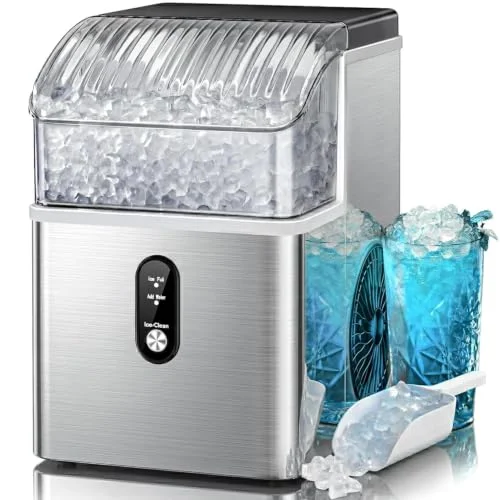
At $137.73, the Kismile sits almost exactly between the two machines bracketing it in this comparison, and its stated output, 35 lbs a day, is close to the Ultra's own 38. We don't have a published tank volume or app connectivity for this listing, so we won't assert either spec in its favor — what the data we have does show is a stainless steel countertop unit priced a third of the Ultra, covering the same basic job. If the side tank and the app aren't specifically what you're after, this is the machine that makes the Ultra's premium hardest to justify on output alone.

Nearly the Ultra's daily number, without the tank or the app, for less than a third of the price.

Kismile stainless steel nugget ice maker
Price
$137.73
Check price →
03The cheapest way in

CyberChill Countertop Nugget Ice Maker

Best for the highest stated output at the lowest price

44lbs Per Day·$69.99·Pebble ice machine

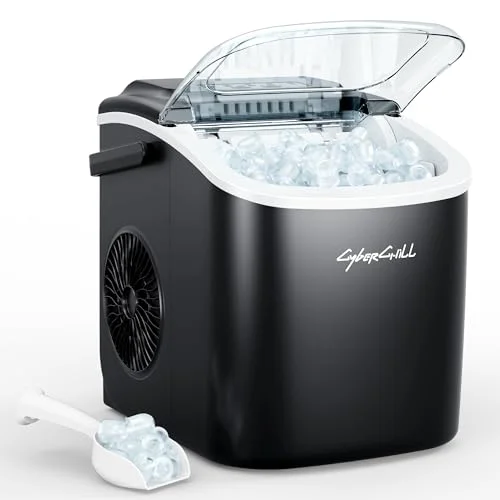
The cheapest machine in this comparison states the highest daily output of the three — 44 lbs, against the Ultra's 38 — which is the single fact that makes "worth $549" a genuinely open question rather than a formality. We'd treat any unverified daily-output claim with the same caution regardless of price, but taken at face value, this machine covers the core job, soft chewable nugget ice, for roughly a sixth of the Ultra's cost. What it doesn't have, as far as the data we have shows, is a stated large-capacity side tank or app connectivity.

The honest way to find out whether you actually want a nugget ice maker, before paying ten times more to find out.

CyberChill countertop nugget ice maker
Price
$69.99
Check price →
The verdict

Who should actually pay the difference

Strip away the marketing and the Ultra's premium reduces to two checkable things: a gallon side tank that neither comparison machine publishes an equivalent for, and WiFi control that neither comparison machine offers at all. Everything else — the ice itself, the basic compressor-and-auger mechanism, even the daily-output figure — is either matched or beaten by machines costing a fraction of the price. That's not a knock on the Ultra specifically; it's how this whole category works. The headline pounds-per-day number is the easiest spec to print and the least differentiated between a $70 machine and a $449 one.

Pay the difference if you make ice daily, hate refilling more than you mind spending, and would genuinely use being able to start a batch from your phone — a wet bar, a home office nook, a layout where you're not standing next to the machine when you want ice. Don't pay it if what you actually care about is pounds of ice per day, because the cheapest machine in this comparison states more of that than the Ultra does. And if you're not sure which camp you're in yet, the honest answer is the one CyberChill's price makes easy: buy the $69.99 machine, live with it for a season, and decide from there whether the side tank and the app are worth $379 more to you. You can always trade up; it's much harder to get that money back once you've traded down.

If you want the fuller case for app control on its own terms, see our Smart Nugget Ice Makers: Is the App Worth It? guide, and if a sub-$100 machine is genuinely in the running for you, we cover that trade-off directly in Is a Nugget Ice Maker Under $100 Worth Buying?

Our method

How we compared — and what we can’t tell you

What we did

Specs and prices, read directly

We compared the published product names, stated daily output, tank and connectivity features, and current Amazon prices for the GE Profile Opal Ultra against two machines that undercut it furthest on price in our catalogue, the Kismile and the CyberChill. Where a listing states a spec directly — the Ultra's 1-gallon side tank and WiFi, CyberChill's 44 lbs/day — we report it as published. Where a listing doesn't state a spec, like tank volume for the other two machines, we say so rather than estimate one.

What we didn’t

We don’t run a testing lab

We do not physically own or test these machines, and we do not publish invented star ratings or review counts — Amazon's own listing data for all three products here carries no verified rating or review count for us to report, so we don't paraphrase sentiment we don't have. What we can do honestly is set each manufacturer's own published claims side by side and be explicit about which numbers are comparable and which aren't.

FAQ

Common questions

What do you actually get for $449 versus a $70 machine?

Based on the published specs for these two listings: a 1-gallon XL side tank that detaches for filling and cleaning, and WiFi app control. Both are real, checkable features that the $69.99 CyberChill doesn't advertise. What you don't get is a higher daily-output number — the Ultra states 38 lbs/Day, while the CyberChill states 44 lbs/Day, a higher figure at a fraction of the price. The premium buys tank size and connectivity, not more raw ice output.

Is the GE Profile Opal Ultra's WiFi feature actually useful?

It depends entirely on where the machine lives and how close you already are to it when you want ice. App control lets you start or check on a batch remotely, which has real value if the machine is somewhere you're not reliably standing nearby — a bar area, a garage fridge nook. If it sits three steps from where you're already in the kitchen, the app adds a screen between you and a button you could just press. It changes nothing about the ice itself.

Why does the cheaper CyberChill claim a higher daily output than the Ultra?

Because the Opal Ultra is built around tank size and convenience rather than maximizing a single headline number, and because the two machines use different internal mechanisms at very different price points. We'd treat any daily-output claim from either manufacturer with some caution, since we have no independent way to verify it beyond the listing itself — but taken at face value, the Ultra genuinely isn't the highest-output machine in this comparison, or in our broader catalogue.

Should I just buy the cheapest one and see if I like nugget ice?

For a lot of readers, yes. The CyberChill at $69.99 covers the core job — soft, chewable pellet ice, made at home with no plumbing — at roughly a sixth of the Ultra's price, with a higher stated daily output. If you later decide refilling bothers you enough to want a larger tank, or that remote start genuinely fits your kitchen, trading up is always available. Trading down after spending $449 is a worse position to be in.