Best Nugget Ice Makers
Honest Take · Countertop Nugget Ice Makers

Under $100 is a narrow shelf, not a wide one.

Only one countertop nugget ice maker we track across this site currently sits below a hundred dollars, and the rungs just above it are built by brands most shoppers have never bought anything from, with listings that leave real specifications blank. A stainless-steel machine a tier higher fills in one of those blanks. We read what each listing actually states, what it doesn't, and worked out when paying more is the cheaper decision once you count what you'd otherwise spend finding out the hard way.

By Ilane TallUpdated October 28, 2026Research-based — no testing lab, no invented scores

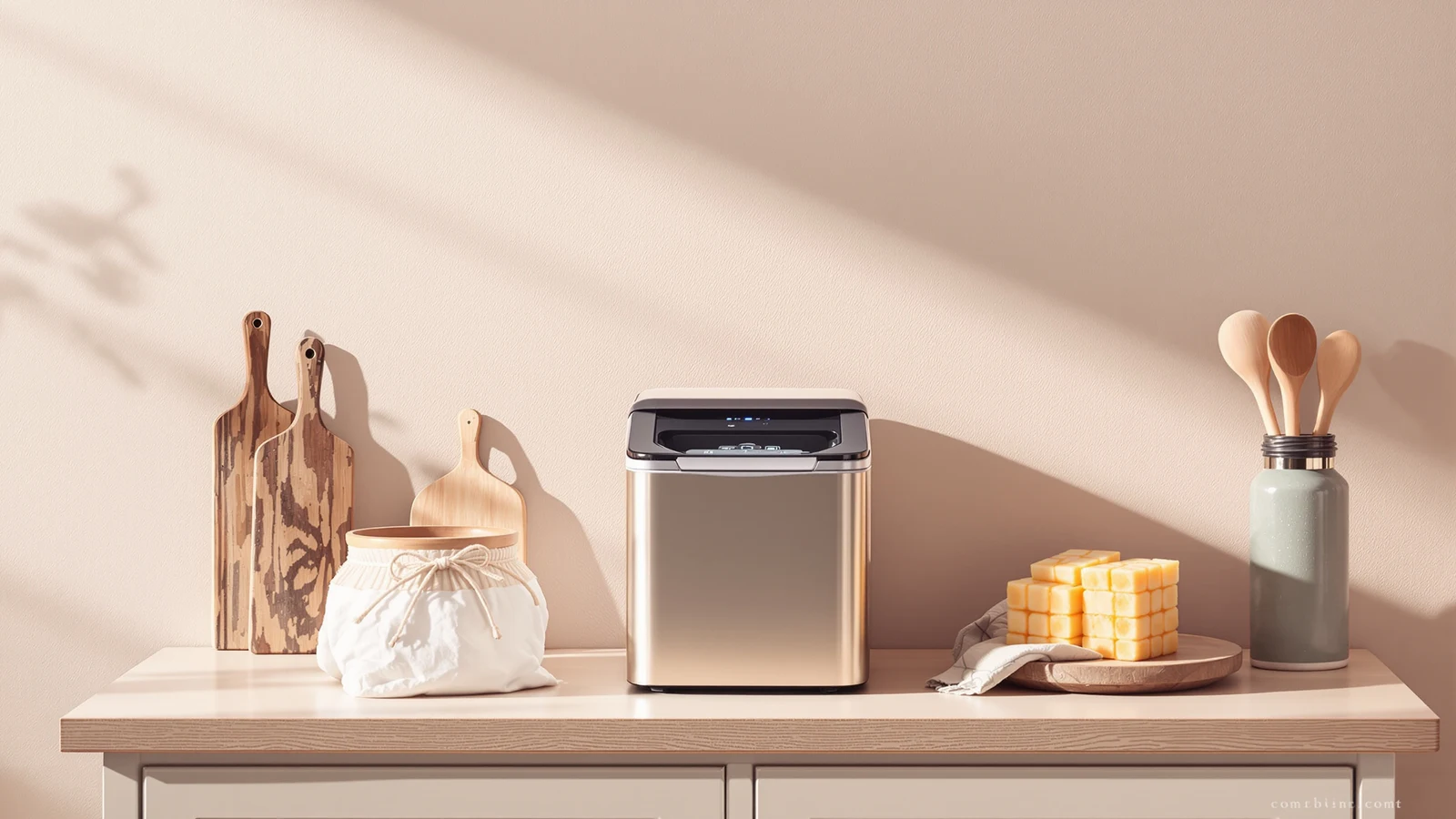
A compact budget countertop nugget ice maker on a kitchen counter beside a glass of soft chewable ice, representing the sub-$100 price tier
Affiliate disclosure: we may earn a commission if you buy through the Amazon links on this page, at no extra cost to you. See how we picked below.

Search "nugget ice maker" on Amazon and the price range looks enormous, from under seventy dollars to well past four hundred. Spend an afternoon actually reading the listings, though, and the sub-$100 shelf turns out to be thin: as far as the machines we track on this site go, there is exactly one at $69.99, and the next machine up already sits past the three-figure mark. That's not a coincidence of our sample. A nugget ice maker is a compressor, a pump and an auger packed into a countertop box, and there's a floor to what that mechanism costs to build, even badly. Below roughly seventy dollars, the margin for anything beyond the mechanism itself — a stated tank volume, a named cleaning cycle, a brand with a service line — mostly disappears.

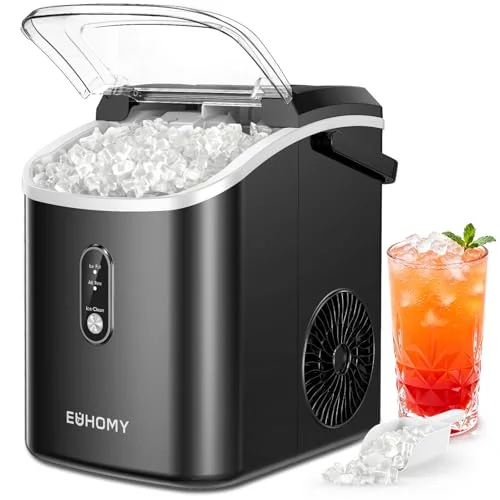
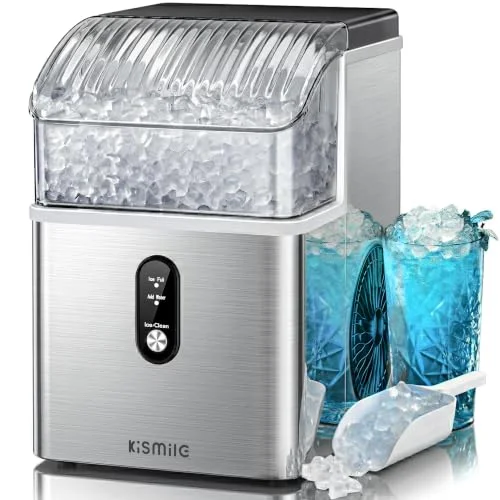
This guide looks at that narrow shelf directly: the CyberChill at $69.99, the EUHOMY with Handle one rung above it at $161.40, and the stainless-steel Kismile at $149.99, which we're using as the reference point for what starts showing up on a listing once the price clears $100 by a comfortable margin. We're not arguing the cheap machines are bad. We're laying out exactly what their own listings state, what they leave blank, and what that blank space costs you in practice — so the price gap is a decision you make on purpose, not one you stumble into because the product card at the top of the search results happened to be cheapest.

Why so few

Why sub-$100 is a narrow shelf, not a wide one

It's tempting to assume a category with a $450 flagship at the top must have a deep, crowded bottom shelf to match — the usual shape of a market, cheap options stacked many deep below the premium ones. Nugget ice makers don't follow that shape. The mechanism that turns water into the soft, compacted pellets this category is named for — a compressor, a circulating pump, an auger that shaves and compacts the ice — is the same basic hardware whether the machine costs seventy dollars or seven hundred. There's very little to strip out to hit a lower price point beyond the housing, the control panel and whatever accessories ship in the box. That's a different economics than, say, blenders or toasters, where a genuinely simpler mechanism supports a genuinely wide range of prices.

The practical result is that the gap between "as cheap as this mechanism can reasonably be built" and "a recognizable brand with a documented tank and a cleaning cycle" is smaller in dollar terms than shoppers expect, and it closes fast. CyberChill sits at $69.99. The next rung up in the data we have on file isn't $85 or $95; it jumps past the hundred-dollar line, where the EUHOMY ($161.40) and the stainless Kismile ($149.99) sit. There is, in other words, very little actually available between seventy dollars and the low hundreds — which is exactly why a guide about "under $100" has one machine to talk about rather than six, and has to measure it against the rungs just above.

That scarcity is itself useful information. When a category has a wide, well-populated budget tier, the bottom-shelf options usually differ from each other in real ways — one cuts the warranty, another cuts the accessories, a third cuts build quality you can actually see in reviews. When the tier is this narrow, the two or three machines that occupy it tend to differ from each other only in presentation, because they're all bumping against the same manufacturing floor. Treat "under $100" less as a meaningful price bracket with its own internal competition, and more as a single, fairly uniform entry point into the category.

The shelf itself

What the cheap machines actually state, and what they leave blank

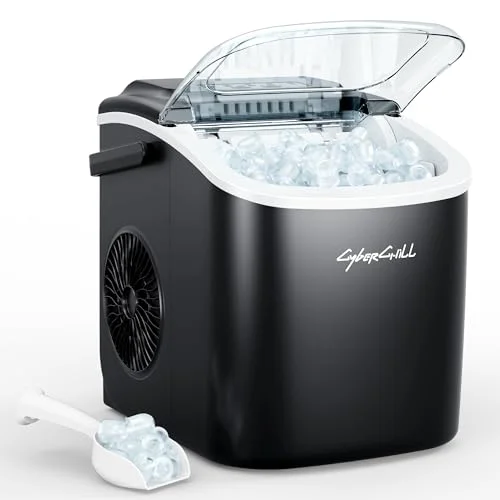
The CyberChill Nugget Ice Makers Countertop, at $69.99, states a daily output of 44 lbs and markets itself as a "Pebble Ice Machine." That's a specific, checkable figure, and it sits at the top end of the daily-output numbers printed anywhere in this category — which is worth reading with the same skepticism you'd apply to any unverified manufacturer claim, cheap or expensive. We don't have a stated water tank volume, bin capacity, fill method or time-to-first-ice for this listing in the data we're working from here. That's not us failing to dig deep enough. It's the listing itself not publishing those figures, which is the pattern across the entire sub-$100 tier in this category, not a flaw specific to this one machine.

The EUHOMY, one rung up, follows the identical shape: a bold, round daily-output number up front, and the specifics that would let you plan around the machine — tank size, fill method, maintenance cycle — simply absent from the listing. Neither of these two machines states a water tank volume we can repeat here as fact. Neither states a named cleaning or descaling cycle. Neither states a time to first ice. What each one does give you, reliably, is a daily output claim and a price, and at this end of the category that is close to the entire specification sheet.

This isn't an accusation that either listing is dishonest. A $69.99 product page is competing on search results and thumbnail price, not on a detailed buyer's guide, and the manufacturer has limited incentive to publish a tank volume that might read as small next to a $450 competitor's gallon side tank. The honest way to shop this tier is to read the daily-output number as the one figure you have, treat every other practical question — how big is the tank, how do you fill it, how do you clean it — as genuinely unknown until you own the machine, and decide whether you're comfortable with that level of uncertainty before you click buy.
One step up

The stainless step up, and the specifications that appear at that price

The Kismile Nugget Ice Maker Countertop sits at $149.99 in our current data and ships as a 35 lbs/day machine with a stainless steel body — Kismile's listings move around in price, and a closely related Kismile model appears in our under-$150 guide, so check the live listing before assuming any figure still holds. What the stainless steel finish buys you over the plastic-bodied machines isn't a documented capacity advantage; it's a different material on a counter that likely already has other stainless appliances on it, which is a legitimate thing to pay for even though it isn't a performance spec.

Where this machine's listing pulls ahead of the other two isn't actually in daily output — 35 lbs is lower than CyberChill's stated 44 lbs, a reminder that the biggest number on the box doesn't track price in any consistent way across this category. It's in what the listing is willing to commit to in writing. A stainless steel body is a stated, checkable material claim, not a marketing adjective. That's a small thing, but it's exactly the kind of specific, checkable detail that's scarce on the two cheaper listings, and the presence of even one solid data point is itself the signal: a listing willing to state one verifiable detail is more likely to have more going on behind the price than one that states none.

We still don't have a stated water tank volume, fill method or named cleaning cycle for this listing in the data available to us, which means the step up from the CyberChill to the Kismile in this specific comparison is not a leap from "no specs" to "full specs." It's a smaller, more honest leap: one additional verifiable detail, a different and arguably more durable material, and a brand that, while still not a household name, is pricing itself as more than a pure race-to-the-bottom entry point.

Side by side

Under $100 against the rungs just above it

ModelBest forDaily outputNotable specPriceGet it
CyberChill Countertop Nugget Ice Maker The cheapest way into the category 44 lbs/day No stated tank, fill method or cleaning cycle $69.99 Get it
EUHOMY Nugget Ice Maker with Handle, 38lbs A carry handle at the highest price here 38 lbs/day Built-in handle, sonic ice marketing $161.40 Get it
Kismile Nugget Ice Maker, Stainless Steel One checkable detail beyond the daily number 35 lbs/day Stainless steel body $149.99 Get it
The picks

Our picks, and who each one is for

01The entry point

CyberChill Countertop Nugget Ice Maker

Best for finding out whether you want this category at all

44 lbs/day claimed·$69.99·No stated tank, fill method or cleaning cycle

The only machine we track below the hundred-dollar line, and the entire reason this guide has anything to compare at that price at all. The 44 lbs a day figure is the highest claimed daily output across every machine named in this guide, cheap or not, which is a detail worth reading with real skepticism rather than letting it decide the purchase on its own — the listing gives you the number and not the water tank size, the fill method or a named cleaning cycle to go with it. As a way to answer the question "do I actually like this ice" before committing real money, it's the honest, inexpensive answer. As a machine you plan a kitchen routine around for years, you're buying it without several pieces of information a pricier listing would give you.

Buy it to find out if you care about nugget ice. Don't buy it assuming it will tell you how often you'll refill it.

CyberChill countertop nugget ice maker
Price
$69.99
Check price →
02One rung above $100

EUHOMY Nugget Ice Maker with Handle, 38lbs

Best for the carry handle, now the priciest machine in this guide

38 lbs/day claimed·$161.40·Built-in carry handle

Priced above the Kismile now, this machine's listing commits to one physical, checkable feature — a built-in carry handle — the same kind of detail that was absent from the CyberChill's listing. We don't have a stated water tank volume, fill method or cleaning cycle for this specific listing either, so the honest framing is the same one that applies across most of this category below $150: a round daily-output number you can't verify, plus whatever specific physical detail the manufacturer was willing to name. Here, that's a handle built for moving the machine, not leaving it bolted to one spot.

The priciest machine in this guide now, and specific about exactly one thing: you can pick this one up and move it.

EUHOMY nugget ice maker with handle
Price
$161.40
Check price →
03The reference point

Kismile Nugget Ice Maker, Stainless Steel

Best if a documented material matters more to you than the biggest output number

35 lbs/day claimed·Stainless steel body·No stated tank or fill method

The lowest claimed daily output of the three machines named in this guide, which is itself the useful reminder: the biggest number on the box and the price don't move together in any reliable way at this end of the category. What you're paying extra for here, against the CyberChill, is a stated stainless steel body — a checkable material fact, not an adjective — rather than a documented capacity or maintenance advantage we can point to. We don't have a stated tank volume or fill method for this listing either, so treat this purchase as buying the finish and the marginally more specific listing, and confirm anything else that matters to you directly on the product page.

You're buying the finish and one extra checkable fact here, not a longer specification sheet overall.

Kismile stainless steel countertop nugget ice maker
Price
$149.99
Check price →
What a listing can't show you

Build quality you cannot check from a listing, at any price

Every specification discussed so far — daily output, tank volume, fill method, material — is something a listing can state in text, whether or not it chooses to. There's a separate category of question a listing can't answer regardless of price: how tightly the compressor is mounted, whether the auger seal holds up after eight months of hard water, whether the control board survives a power flicker. That's not a sub-$100 problem specifically. It's a problem with buying any appliance from a photo and a bullet-point list rather than handling the unit yourself, and we want to be direct about it rather than imply that a longer specification sheet solves it: a longer spec sheet tells you what the manufacturer measured, not how long the unit lasts.

What changes at the bottom of the price range isn't that build quality becomes definitionally worse — we have no physical units in hand and no testing lab, so we're not going to claim that as a tested fact, cheap or expensive alike. What changes is the number of signals you have to go on. A pricier, more established listing that states a tank volume, a named cleaning cycle and a brand history gives you several data points that at least suggest a company confident enough in its own numbers to publish them. A listing with one line — a daily-output claim and a price — gives you one data point and leaves everything else, including the question of how the thing is actually built, as something you'll only learn by owning it.

The honest framing, then, isn't "cheap machines are built worse." It's "cheap listings tell you less, and the gap in what you know going in is itself a cost," separate from and in addition to whatever the machine's actual mechanical reliability turns out to be. If build quality reassurance matters more to you than saving the difference, that reassurance is more likely to come from a listing willing to state more about itself, not from the price tag alone.

The case for cheap

Who should buy the cheap one anyway

Buying the sub-$100 machine is the right call for a specific, common situation: you don't yet know whether nugget ice actually changes how you enjoy a drink, and you'd rather spend seventy dollars finding out than guess based on a spec sheet or someone else's description of the texture. Nugget ice is polarizing in a way regular cube ice isn't — some people switch permanently and never look back, others try it once and go back to their old ice tray without a second thought. That's a personal preference question no amount of reading can answer for you, and a $69.99 machine is a cheap way to answer it.

It's also the right call if a nugget ice maker is a secondary, occasional appliance rather than a daily-use fixture — something you'll bring out for a few parties a year, or use seasonally, where the absence of a documented tank volume and cleaning cycle matters less because you're not living with its maintenance routine every single day. The gaps in the listing that matter most for someone using a machine constantly — how often do I refill it, how do I keep it clean — matter proportionally less for someone using it occasionally.

Where it's the wrong call is if you already know you want nugget ice daily, for years, as a fixture of how your kitchen runs. In that case the unknowns on a sub-$100 listing — the tank size that decides how often you refill it, the absence of a named cleaning cycle that decides how well it still works in a year — are exactly the things that will shape your day-to-day experience the most, and they're the things you're buying blind on at this price.

The arithmetic

When paying more is the cheaper decision long-term

The gap between the $69.99 CyberChill and the stainless Kismile at $149.99 looks, on its face, like straightforward savings if you pick the cheaper machine. It stops looking that way the moment you price in what the missing information costs you. A machine with no stated tank volume and no stated cleaning cycle is one you're more likely to under-maintain simply because nothing tells you when or how — and we've covered elsewhere on this site how directly descaling neglect shortens the useful life of any nugget ice maker, regardless of price. If skipping that maintenance cuts a $69.99 machine's working life meaningfully short, the "savings" evaporate the day you're shopping for a replacement.

The arithmetic that actually favors the pricier option isn't about the sticker price at all. It's about the stated detail. A listing willing to commit to a material, a tank size or a named cleaning cycle is a listing you can actually plan around — buy the right descaler, expect the right refill interval, know what to check if performance drops. A listing that commits to nothing beyond a daily-output number and a price leaves you guessing at every one of those questions, and guessing wrong on any of them is usually what turns a cheap appliance into a short-lived one.

If you're buying to find out whether you like nugget ice at all, as discussed above, the cheaper machine is the right money to save — you may decide you don't want either machine in six months, and spending less to learn that is simply the correct trade. If you already know this is a permanent fixture in your kitchen, paying more buys you a listing that tells you more about how to keep the machine running, and in a category where the mechanism itself is nearly identical across prices, that information is frequently the cheaper purchase over a year or two, not the more expensive one.

Our method

How we picked — and what we can’t tell you

What we did

Listing claims, read for what they state and don't

We compared the published product names, stated daily-output figures and current Amazon prices for every countertop nugget ice maker we track below and just above the $100 line, then read each listing specifically for the details that matter once price is the deciding factor: tank volume, fill method, a named cleaning cycle, and any stated material or accessory. Where a listing stated a spec directly, like Kismile's stainless steel body, we report it. Where it didn't, we say so rather than fill the gap with a guess.

What we didn’t

We don’t run a testing lab

We do not physically test these machines, we do not own them, and we do not publish invented scores or ratings. No independent source we've found verifies daily-output claims for countertop nugget ice makers at any price, so we treat every pounds-per-day figure in this guide as the manufacturer's own stated claim rather than a measured result — and we're equally direct that build-quality differences between these machines are not something we can assert from a listing, cheap or expensive.

FAQ

Common questions

Is there really only one nugget ice maker under $100?

In the data we track on this site, yes — the CyberChill at $69.99 is the only machine below the hundred-dollar line, and the next option already sits past the hundred-dollar line rather than filling in gradually. That gap exists because the core mechanism, a compressor, pump and auger, costs roughly the same to build regardless of price point, leaving little room for a wide, gradually-priced budget tier the way other small appliances have.

What do the cheap listings leave out that the stainless Kismile includes?

Mainly a stated material. The Kismile listing commits to a stainless steel body, a checkable fact; the CyberChill listing commits only to a daily-output claim and a price. None of the three machines compared in this guide publish a water tank volume, fill method or named cleaning cycle in the data we have, so the step up in price here buys one additional verifiable detail rather than a complete specification sheet.

Does a higher price mean better build quality?

We can't confirm that as a tested fact, since we don't physically test these machines or own them. What a higher price more reliably buys, at least in this comparison, is a listing willing to state more about itself — a material, a feature, sometimes a cleaning cycle — which gives you more to plan around even without being direct evidence of a sturdier mechanism underneath.

Should I just buy the cheapest one?

If you're buying to find out whether nugget ice suits you before spending real money, yes, the $69.99 machine is the right amount to risk on that question. If you already know you want daily nugget ice as a permanent kitchen fixture, the unknowns on that listing — tank size, cleaning cycle — are exactly the details that shape daily use the most, and a machine one price tier up that states more of them is often the cheaper decision over a year or two once maintenance and replacement are counted.