Best Nugget Ice Makers
Comparison · Frigidaire Nugget Ice Makers

Same badge, two machines. One number tells you which to buy.

Frigidaire doesn't sell one nugget ice maker in this catalogue. It sells two, sixty-six dollars apart, and only one of them carries the words “2.0 Gen” in its listing title. We read both listings side by side — capacity, window, price — and compared them against the cheapest machine in the catalogue, which happens to undercut both by a wide margin.

By Ilane Tall2 generations, 1 brandResearch-based — no testing lab, no invented scores

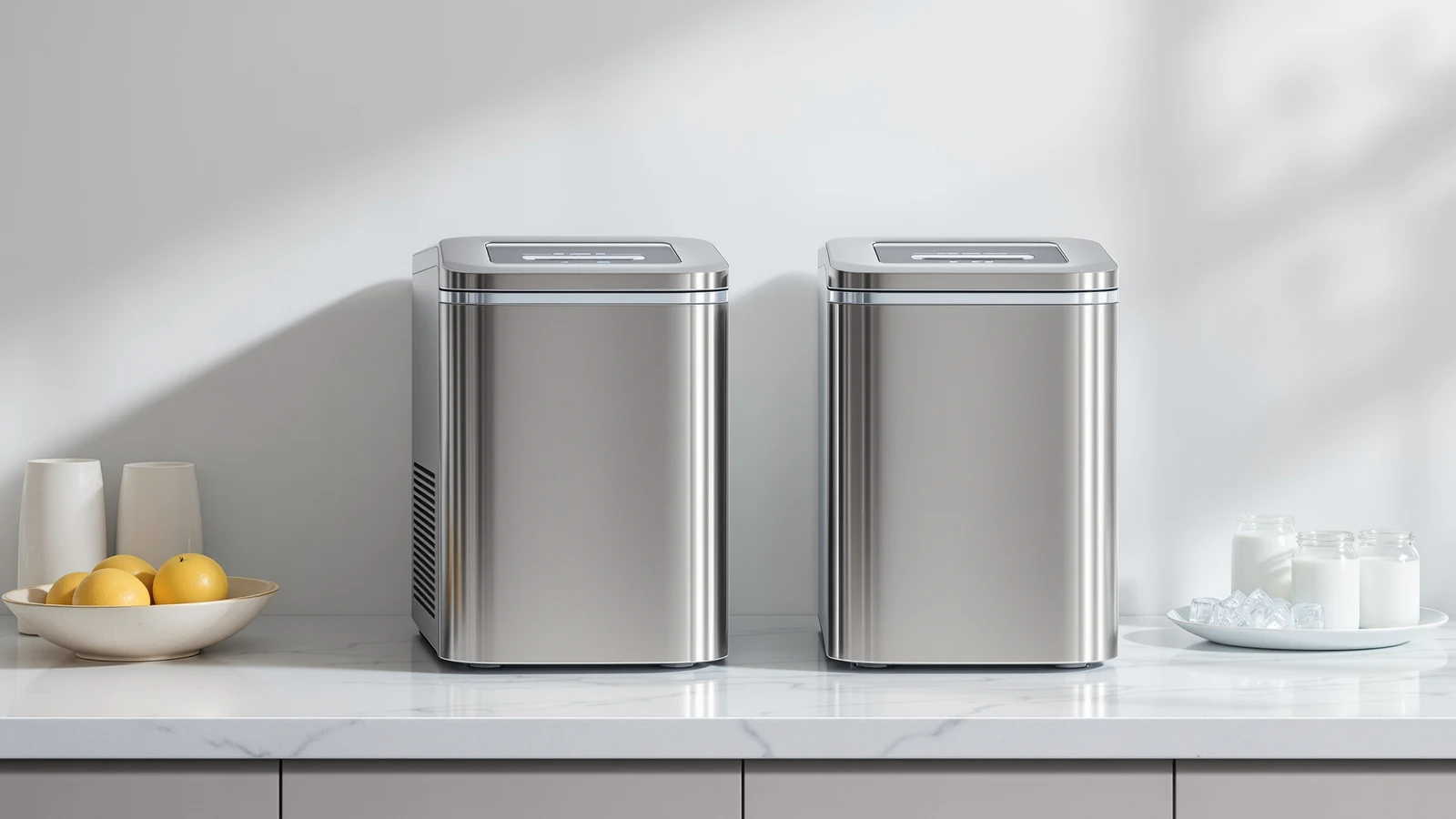
Two Frigidaire countertop nugget ice makers side by side, one with a transparent window and one without
Affiliate disclosure: we may earn a commission if you buy through the Amazon links on this page, at no extra cost to you. See how we compared below.

If you search “Frigidaire nugget ice maker” on Amazon, you won't get one result. You'll get two, from the same brand, aimed at the same countertop, and separated by sixty-six dollars at current pricing. One listing is plain: Frigidaire Countertop Crunchy Chewable Nugget Ice Maker, Compact, 33 lbs per Day, Metallic Finish. The other adds a phrase the first one doesn't have anywhere in its title: Frigidaire Nugget Ice Maker, Countertop Ice Machine with Transparent Window, Sonic Ice Maker with 44 lbs. Capacity, Auto Self Cleaning Ice Maker Machine, 2.0 Gen, Cream.

“2.0 Gen” is doing a lot of work in that title. It reads like a software update, the kind of label that implies the newer thing is simply better in every way the old thing wasn't. Sometimes that's true. Sometimes a generation label on an appliance listing just means a different SKU with a different accessory bundle and a different list price, and the actual spec sheet decides whether the premium is earned. We pulled the two listings apart line by line — capacity, window, price, self-cleaning claim — and we also checked whether a completely different machine in the catalogue, a sixty-nine-dollar CyberChill, makes either Frigidaire a hard sell on pure numbers. This is a straight comparison of what each listing states, not a verdict handed down from a test bench we don't own.

The label

What “2.0 Gen” means on this listing, and what it doesn't promise

“2.0 Gen” appears exactly once in the data we're working from: inside the product title of the Frigidaire Nugget Ice Maker with Transparent Window, ASIN B0BCXJQ5YN. It is not a certification, it is not an industry-standard versioning scheme, and it is not defined anywhere in the listing beyond the title itself. The only way to know what changed between “generation one” and “generation two” of a Frigidaire countertop ice maker is to compare what each listing actually states, which is exactly what the rest of this page does. Treat the phrase as marketing shorthand for “newer SKU,” not as a guarantee that every spec improved, or that the internal mechanism is meaningfully different from the first machine's.

What the label does not promise, specifically: it doesn't promise a faster ice cycle — neither listing in our data states a time-to-first-ice figure, so we can't compare that at all. It doesn't promise quieter operation, longer warranty, or a different footprint; none of those are stated for either machine. What it does appear to bundle, based on what's actually printed in the two titles and descriptions, is a visible capacity increase and a feature the original model's listing doesn't mention. That's the entire substance of “2.0” here: two concrete differences, not a wholesale redesign. If you're the kind of buyer who wants every number in writing before paying a premium for a newer label, the next two sections are the ones that matter, and the rest of the page title is mostly atmosphere.

Spec #1

33 lbs against 44 lbs: the capacity gap, in writing

The original Frigidaire Countertop Crunchy Chewable Nugget Ice Maker (ASIN B0CXZB8PX4) states 33 lbs per day in its own product title. The 2.0 Gen model (ASIN B0BCXJQ5YN) states 44 lbs capacity in its title. That's an eleven-pound gap, a roughly one-third increase over the original figure, and it's the single cleanest, most verifiable difference between the two machines in the data we have. Unlike the vaguer language elsewhere on both listings, a daily-output number is a number: it's printed, it's comparable, and it's the one spec every nugget ice maker listing in this catalogue leads with for a reason — it's the easiest thing to put in bold at the top of a title.

What that number does and doesn't tell you is worth being precise about. Thirty-three or forty-four pounds a day assumes the reservoir stays filled and the machine runs continuously for twenty-four hours, which is not how anyone actually uses a countertop ice maker. In practice, the figure matters less as an absolute ceiling and more as a relative one: whatever your household's real ice draw is, the 2.0 Gen model has roughly a third more headroom before it would, in theory, hit its stated limit. For a one- or two-person kitchen making ice for a few drinks a day, both numbers are comfortably more than you'll use. For a household that fills a cooler for a weekend, keeps a pitcher of iced tea going, or hosts regularly, the extra eleven pounds is the kind of margin you notice precisely on the days it matters, not on an average Tuesday.

Neither listing in our data states a water reservoir volume or a time-to-first-ice figure for either Frigidaire model, which means we can't tell you how long it takes either machine to reach its stated daily number, or how often you'd need to refill the tank to get there. If reservoir size or fill frequency is the deciding factor for your kitchen, that's a detail to confirm on the live listing before ordering rather than something either title commits to.
Spec #2

The transparent window: new on 2.0 Gen, absent on the original

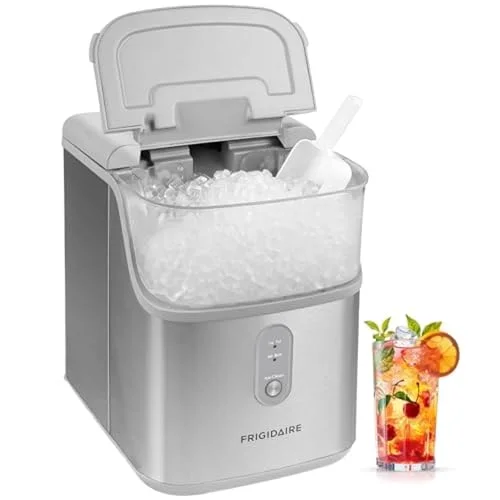
The second concrete difference is the one right there in the newer model's title: “Countertop Ice Machine with Transparent Window.” The original 33-lb Frigidaire's title and the data we have for it don't mention a window at all. On a nugget ice maker, a window is a small thing with a real everyday use: you can see how much ice is in the bin and whether the machine is still cycling without lifting the lid, which on a continuously recirculating ice maker means less cold air and warm kitchen air trading places every time someone checks. It's a minor convenience rather than a performance spec, but it's one of exactly two things the newer listing adds that the older one's title and data don't claim.

It's worth being honest about what we can't say here too. We don't have confirmation of window size, placement, or whether it's a full front panel or a smaller porthole — the data we're working from states the feature exists on the 2.0 Gen model and doesn't state it exists on the original, and that's the extent of what we'll assert. If the window itself is the deciding factor for you — some buyers specifically want to glance over and confirm the bin isn't empty before they walk over with a glass — it's a real, named differentiator between these two specific machines, not a marketing flourish invented for the title. If it's not something you'd ever think about once the machine is on the counter, it's the kind of feature that's nice to have and not worth chasing on its own.

Spec #3

“Auto Self Cleaning”: stated on the newer listing, not the older one

The 2.0 Gen title also includes “Auto Self Cleaning Ice Maker Machine,” language the original 33-lb listing's title and the data we have don't carry. Self-cleaning matters more on this category of appliance than it sounds like it should: every countertop nugget ice maker recirculates the same water continuously rather than draining and refilling, so mineral scale builds up over weeks and eventually shows up as slower ice production and a change in taste. A machine that runs a cleaning cycle automatically, on a schedule or a button press, is addressing a maintenance job that otherwise falls entirely on the owner to remember.

What we don't have, for either Frigidaire model, is a description of what the self-clean cycle actually does mechanically, how often it's recommended, or whether it replaces or simply supplements manual descaling. “Auto self cleaning” on a product title is a claim worth taking seriously — it's a real, useful category of feature, and it's a named difference between the two listings — but it's also exactly the kind of phrase that's easy to print and hard to verify without owning the unit. We'd point you to the live listing's full description and manual before assuming it eliminates descaling altogether. For the general mechanics of what a self-clean cycle on this category of machine is actually built to do, see our guide on what the self-clean cycle on a nugget ice maker actually does.

Side by side

The two Frigidaires, and the cheapest alternative

ModelBest forStated capacityNotable specPriceGet it
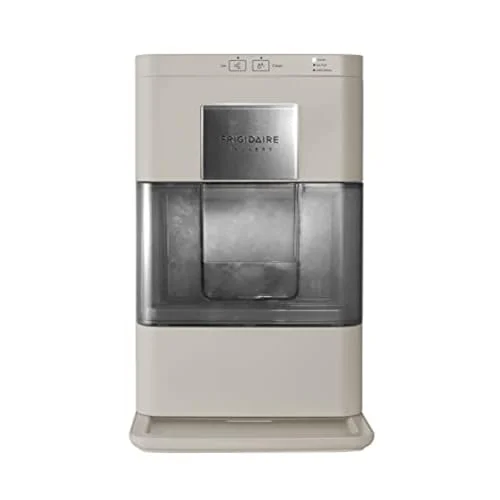
Frigidaire Countertop (original) A lower entry price, same badge 33 lbs/day Metallic finish, no window stated $191.33 Get it
Frigidaire 2.0 Gen with Window More capacity, a visible bin 44 lbs Transparent window, auto self-clean $220.14 Get it
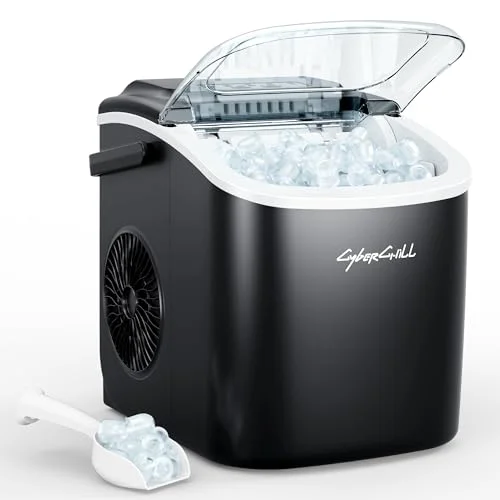
CyberChill Countertop The cheapest way to the same output 44 lbs/day Removable tank, viewing window $69.99 Get it
The money

$66, and what it actually buys

At the prices in our data, the original Frigidaire runs $191.33 and the 2.0 Gen model runs $220.14 — a difference of $65.56, close enough to call it the sixty-six dollars this guide's framing refers to. For that premium, based strictly on what's stated in the two titles and listings, you get three things: eleven more pounds of stated daily capacity, a transparent window, and an auto self-cleaning claim. You do not get, as far as the data we have shows, a different warranty term, a different footprint, or a stated change in how fast the machine makes its first batch of ice.

Whether that's a good trade depends entirely on which of those three things you'd actually use. If you're buying for a household that makes ice occasionally and doesn't care whether you can see inside the bin, paying an extra sixty-six dollars for capacity you won't approach and a window you won't glance at is money spent on a label, not a need. If you make ice daily, keep a pitcher going, or specifically dislike opening a lid to check the bin, the newer model's three additions are concrete and each one is individually worth something — the question is just whether all three together are worth sixty-six dollars to you, or whether you'd rather have that money and a 33-lb machine that does the same basic job.

Amazon prices on both of these move, sometimes by more than the editorial point being made here. Before deciding based on the gap, check the live listing price for both ASINs — a narrower gap makes the 2.0 Gen model an easier call, and a wider one makes the case for the original stronger.

The third option

Where the cheapest machine in the catalogue still beats both

Neither Frigidaire comparison is complete without naming the machine that undercuts both of them on pure price-to-stated-capacity arithmetic: the CyberChill Nugget Ice Makers Countertop, at $69.99, states the same 44 lbs per day as the 2.0 Gen Frigidaire — at roughly a quarter of the price — and its own listing mentions a viewing window and a removable tank, which puts it ahead of the original 33-lb Frigidaire on stated capacity and ahead of neither Frigidaire on brand recognition. That last point is the real trade, and it's worth saying plainly rather than letting a spec table imply otherwise: CyberChill is not a name with the decades of service history and retail presence that Frigidaire carries, and an unverified capacity claim from a newer, less established brand deserves more scepticism than the same number from an established appliance maker. We have no review data, no owner reports, and no independent capacity verification for any of the three machines on this page, CyberChill included — we're comparing what's printed in each listing, not confirming it against a lab result none of us ran.

What that means practically: if your only criterion is “pounds of ice per day per dollar,” CyberChill wins by a distance that neither Frigidaire can close. If your criteria include a brand with a long US service and retail track record, a stated self-clean cycle, and a willingness to pay for both, the 2.0 Gen Frigidaire is the more defensible of the three. The original 33-lb Frigidaire's honest position in this three-way comparison is the weakest: it costs more than CyberChill, states less capacity than both of the other two, and doesn't carry the window or self-clean claim its own sibling SKU does. It's hard to find the specific buyer for whom the original is the best of these three options rather than simply the one they happened to find first.

The pick

The pick, by whether the window and the extra 11 lbs matter to you

01If capacity and the window matter

Frigidaire Nugget Ice Maker, 2.0 Gen, with Transparent Window

Best for buyers who want the Frigidaire name with more headroom

44 lbs capacity·Transparent window·Auto self-clean·Cream finish

This is the newer SKU, and on the numbers that are actually stated, it earns its premium over the original: a third more capacity, a window the original doesn't have, and a self-cleaning claim the original's listing doesn't make either. If you make ice often enough that eleven extra pounds a day is real margin, or if seeing the bin without lifting the lid is worth something to your kitchen routine, this is the Frigidaire to buy — just confirm the live price gap against the original before paying it, since the case gets weaker if that gap widens much past sixty-six dollars.

The premium buys three named things, not a mystery upgrade. Decide if you'd use all three.

Frigidaire 2.0 Gen nugget ice maker with transparent window
Price
$220.14
Check price →
02If you just want the badge, cheaper

Frigidaire Countertop Crunchy Chewable Nugget Ice Maker

Best for the lowest price with the Frigidaire name still on it

33 lbs/day·Metallic finish·No window or self-clean stated

The honest case for the original is narrow but real: it's the cheaper way to a Frigidaire-branded countertop nugget maker, and thirty-three pounds a day is still more ice than most one- or two-person households will use on an average day. What you're explicitly not getting, based on the data we have, is the window, the stated self-clean cycle, or the extra capacity margin — and at $191.33, it's priced closer to the 2.0 Gen model than to the budget end of this category, which is the detail that makes the next pick worth reading before you buy this one.

Buy this one specifically for the brand at the lowest price that still carries it — not because the spec sheet asks you to.

Frigidaire countertop nugget ice maker, original model
Price
$191.33
Check price →
03If price-per-pound is all that matters

CyberChill Nugget Ice Makers Countertop

Best for the same stated capacity at a quarter of the cost

44 lbs/day·Removable tank·Viewing window·No established brand history

If neither Frigidaire's name is the point, and the number on the title is, CyberChill states the same 44 lbs as the 2.0 Gen Frigidaire for under seventy dollars — and adds a viewing window of its own. What you're trading away is the service and retail track record a long-established brand like Frigidaire carries, and the fact that we have no independent way to verify CyberChill's capacity claim beyond the listing itself, the same caveat that applies to every unverified number in this category. As a way to find out whether the extra capacity even matters to you before spending real money on it, it's the most honest entry point on this page.

Same headline number as the pricier Frigidaire, a fraction of the cost, and a brand name you're trusting on faith.

CyberChill countertop nugget ice maker
Price
$69.99
Check price →
Our method

How we compared — and what we can’t tell you

What we did

Two listings, read line by line

We compared the published titles, stated capacities and current Amazon prices for both Frigidaire countertop nugget ice makers in this catalogue, plus the CyberChill model that matches the newer Frigidaire's stated output at a fraction of the price. Where a listing's title or description states a spec directly — capacity, window, self-cleaning — we report it as stated. Where it doesn't, including time-to-first-ice and reservoir size for both Frigidaires, we say plainly that the figure isn't in the data we have rather than estimate one.

What we didn’t

We don’t run a testing lab

We do not physically test these machines, we do not own them, and we do not publish invented scores or ratings for products with no review data behind them. “Auto self cleaning” and “transparent window” are claims taken directly from the 2.0 Gen listing's own title and description, not findings from owning or operating either machine. What we can do honestly is set the two listings' own claims against each other and against a third machine's claims, and be explicit about which differences are documented and which are simply absent from either listing.

FAQ

Common questions

Is the Frigidaire 2.0 Gen just a relabeled version of the original?

No — based on what's actually stated in each listing, there are two concrete differences, not a relabeling. The 2.0 Gen model's title states 44 lbs of capacity against the original's 33 lbs, and it adds a transparent window and an auto self-cleaning claim that the original listing's title and data don't mention. “2.0 Gen” isn't an industry-standard version number with a defined meaning beyond the listing; it's the name Frigidaire gave this particular SKU, and the two stated differences are the substance behind it.

Is the extra 11 lbs of capacity worth $66?

That depends on whether you'd ever approach either machine's stated daily figure. Both 33 lbs and 44 lbs are more ice than most one- or two-person households use on an average day, since the number assumes continuous twenty-four-hour operation that nobody actually runs. The eleven-pound gap matters most to households that make ice heavily — entertaining regularly, filling coolers, keeping a pitcher going — and matters least to someone making ice for a few drinks a day, where the premium is really paying for the window and the self-clean claim instead.

Does the transparent window actually change how the machine works?

No, it's a visibility feature, not a performance spec. It lets you see the ice bin and whether the machine is cycling without opening the lid, which on a machine that recirculates water continuously means less warm air getting into the unit every time someone checks on it. It's named explicitly in the 2.0 Gen listing's title and is not mentioned for the original model in the data we have, which is the extent of what we can confirm about it.

Why would anyone buy the original 33-lb Frigidaire over CyberChill?

Mainly for the brand. CyberChill states the same 44 lbs as the 2.0 Gen Frigidaire for under seventy dollars, which puts the original 33-lb Frigidaire in an awkward spot on pure numbers: it costs more than CyberChill and states less capacity than either alternative on this page. The honest reason to still choose it is wanting the Frigidaire name specifically, at the lowest price that still carries it, and accepting that you're not getting the window, the self-clean claim, or the extra margin the newer Frigidaire SKU adds.