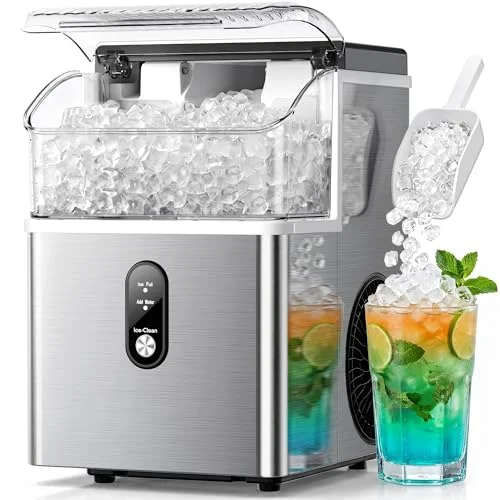
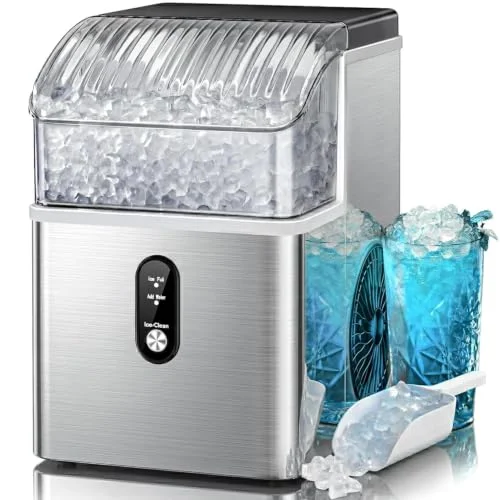
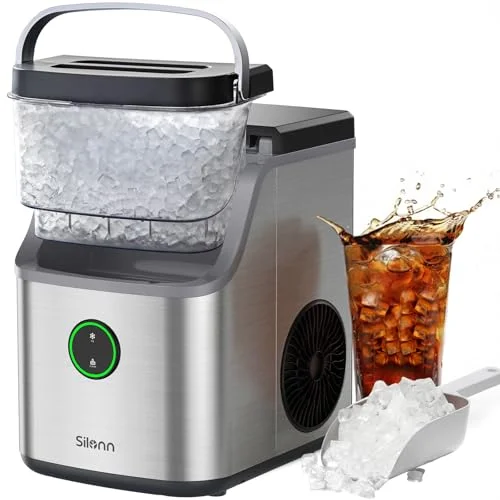
Everything above argues for treating a single-SKU brand as a flag to look closer, not as a reason to buy elsewhere automatically — and the arithmetic shows exactly why that distinction matters. Our separate piece on the real price per pound of daily capacity runs this division on a wider set of machines; applied to just these three, it changes the ranking. Crzoe's $139.99 for 35 lbs a day works out to about $4.29 per pound of rated daily capacity. Kismile's $137.73 for the identical 35 lbs works out to about $4.14 per pound — still the cheapest of the three. Silonn's $136.71 for 33 lbs works out to about $5.17 per pound — the most expensive per pound, not just in total price.
Run that math and Crzoe is not the weak link in this specific group of three; Silonn is, on these numbers alone. Crzoe beats Silonn outright: a lower total price, a higher stated daily output, and a lower cost per pound, stated extra feature or not. It only loses on the numbers to Kismile, and only by the same $5.01 gap already covered above — a gap that exists because of Kismile's lower price for an identical claim, not because Crzoe's spec sheet is thin.
So the honest ranking, specs first and brand history second: if the cheapest route to this exact output is what you want, Kismile's price edge and its (admittedly messy) track record both point the same way, and there's little reason to choose Crzoe over it on the day both are in stock. But if Kismile's specific listing is priced differently when you look, temporarily unavailable, or you'd simply rather avoid the duplicate-ASIN situation covered elsewhere on this site, Crzoe is not a worse bet than Silonn — on the published numbers, it's a better one, single SKU and all. Selling exactly one product isn't a reason to skip a brand outright. It's a reason to make sure, this once, that the spec sheet is doing the work the brand name can't.