Best Nugget Ice Makers
Buying Guide · Countertop Nugget Ice Makers

The finish is the easy choice. It isn’t always the only thing that changed.

A Silonn countertop nugget ice maker ships in black and in stainless steel, same 36 lbs a day, thirty dollars apart. A GE Profile Opal Ultra ships in a finish GE calls black stainless steel, which is not the same claim as either of those. Picking a color is usually the simplest decision in this category — until the finish quietly points at a different price, a different surface to wipe down, or, occasionally, a different machine than the one you assumed you were comparing.

By Ilane TallUpdated November 7, 2026Research-based — no testing lab, no invented scores

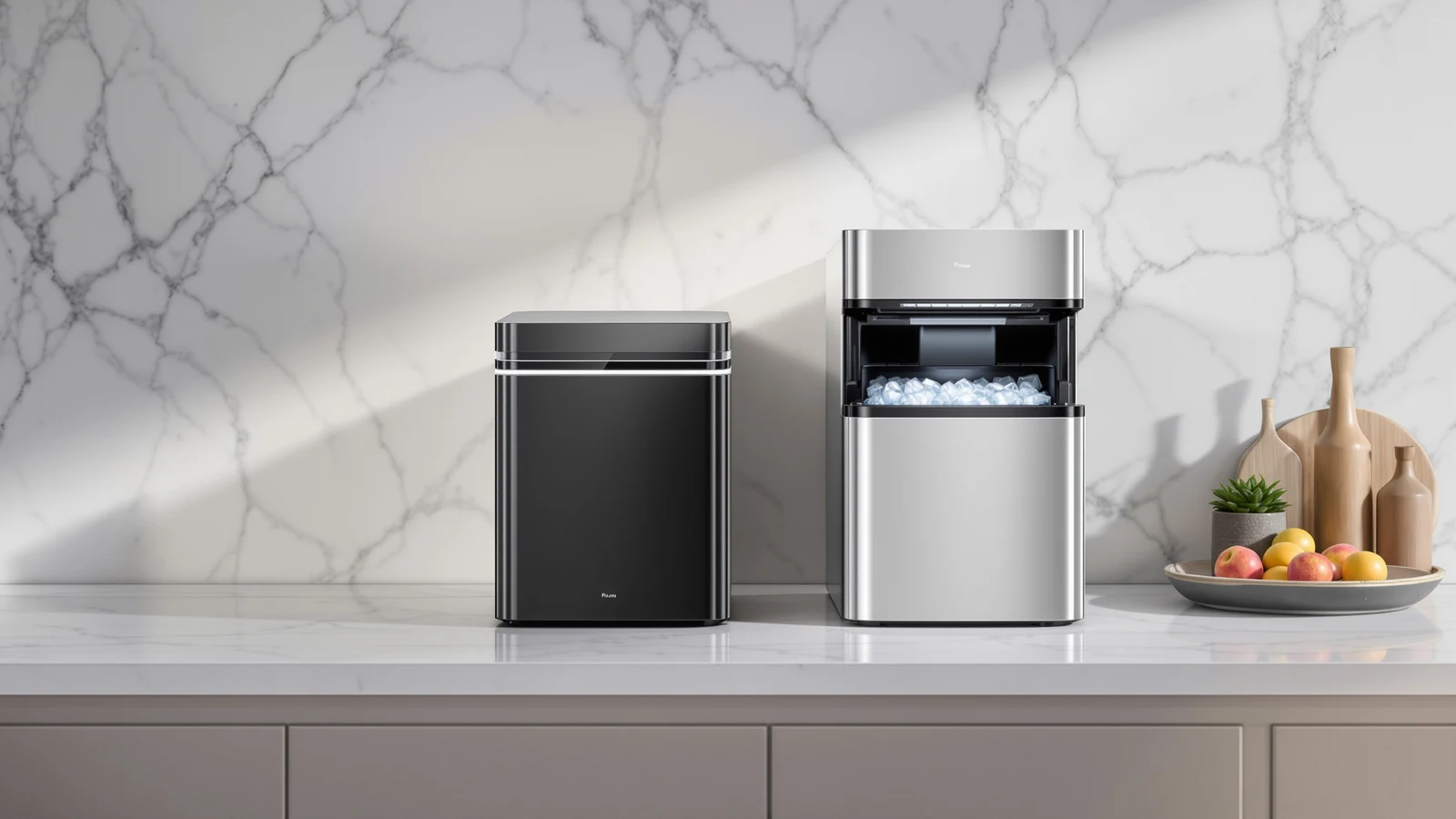
Two countertop nugget ice makers side by side on a kitchen counter, one in a black finish and one in brushed stainless steel
Affiliate disclosure: we may earn a commission if you buy through the Amazon links on this page, at no extra cost to you. See how we compared below.

Scroll through enough nugget ice maker listings and a pattern shows up fast: the same product name, the same bullet points about self-cleaning and daily output, repeated almost word for word across two listings that differ in exactly one place — a single word in the title, “Black” on one and “Stainless Steel” on the other. It looks like the most trivial decision in the entire buying process, the kind of choice you make last, after the specs are settled. Sometimes that's exactly what it is. Sometimes it isn't, and the finish is standing in for a difference the listing never states directly.

This guide compares three real listings that make the point from both directions. Two are the same Silonn machine, sold separately in black and in stainless steel, at two different prices for what reads as identical hardware. The third is the GE Profile Opal Ultra, sold only in a finish GE names specifically as black stainless steel — a term that is doing more work than it looks like, and that has nothing to do with the plain black plastic shell on the cheaper Silonn. We'll go through what the finish does and doesn't change: fingerprints, kitchen matching, price, and the one case where “black” on two different listings does not mean the same material at all.

The common case

When black and stainless are the same machine with a different shell

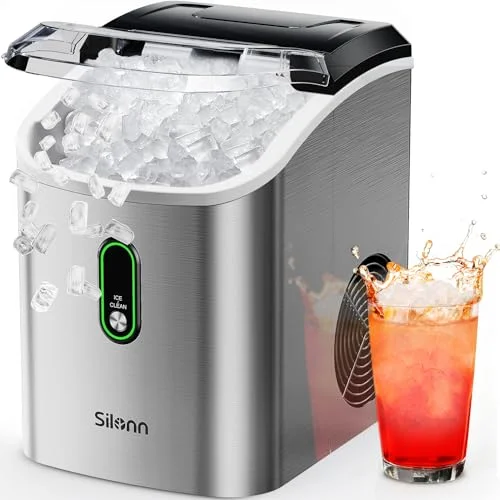
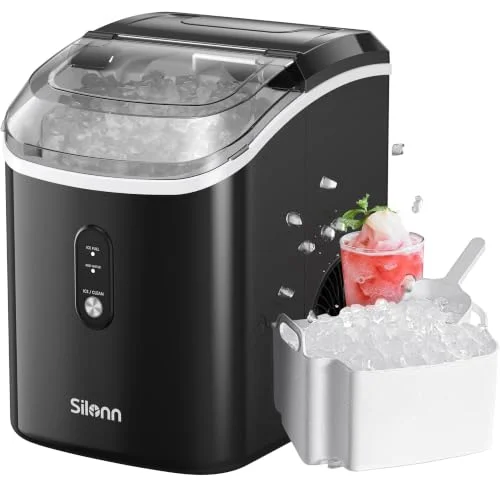
The clearest example of this pattern in our own catalogue is a pair of Silonn listings. The Silonn Nugget Ice Maker Countertop in Black (ASIN B0C9SWH3RC) is titled “Chewable Pellet Ice Machine with Self-Cleaning Function, 36lbs/24H Portable Ice Makers for Home Kitchen Office, Black.” The Silonn Nugget Ice Maker Countertop in Stainless Steel (ASIN B0DKFRNBTH) reads, almost word for word, “Pellet Ice Machine with Self-Cleaning Function, Sonic Ice Maker Produces 36lbs of Chewable Ice in 24 Hours, Ideal for Home Kitchen and Office (Stainless Steel).” Strip the finish word out of both titles and what's left is the same brand, the same mechanism name, the same self-cleaning function, and the same stated output: 36 lbs of chewable ice every 24 hours.

That's the pattern worth trusting over a product photo: when two listings from the same brand use nearly identical language for everything except the finish, the simplest and most likely explanation is exactly what it looks like — one internal mechanism, built once, wrapped in two different shells for two different kitchens. We don't have Silonn's internal engineering documents in front of us, and we're not going to claim certainty we don't have about what's bolted inside either case. What we can point to honestly is the listings' own language, and in this pair, the language lines up on everything that isn't the finish.

That is not a universal rule, though, and it's worth being precise about why. A matching finish word and a matching daily-output number are a strong signal, not a guarantee. Two listings can look like twins in their title and still diverge somewhere a shopper wouldn't think to check — a different ASIN sometimes hides a genuinely different revision behind what looks like a cosmetic choice, which is exactly the trap our piece on why the same Kismile ice maker has two different listings walks through from the opposite angle. The lesson there applies here in reverse: read the full spec line on both listings, not just the headline photo and the finish word, before assuming a $30 gap is only about color.

What actually differs day to day

Fingerprints, smudges, and why stainless shows more than people expect

This is general, well-documented material behavior, not something specific to any one ASIN or something we measured ourselves on these machines: brushed and polished stainless steel surfaces show fingerprints and oily smudges far more visibly than matte black plastic or a dark powder-coated finish. It's the same reason stainless refrigerator doors and dishwasher fronts have spent two decades as the most commonly complained-about surface in a kitchen. Light reflects unevenly off the oil a fingertip leaves behind, and a brushed-metal texture makes that unevenness more visible at an angle than a flat, light-absorbing black surface does.

The reason this matters more on a nugget ice maker than on a refrigerator is simple arithmetic about how often you touch it. A fridge door gets a handle pull a handful of times a day. A countertop nugget ice maker gets the water reservoir lid lifted, the ice scoop handled, the bin opened, and a button pressed every single time you want ice — which, in a household that actually uses one of these daily, is a lot more contact than a refrigerator door sees, concentrated on a smaller surface, sitting directly in your eyeline at counter height under kitchen lighting rather than at the edge of a room. A smudge pattern that would be a minor annoyance on a tall fridge door is a much more visible daily irritation on a box you look at from eighteen inches away several times a day.

Matte black plastic, the kind used on the black Silonn unit here, doesn't eliminate contact marks, but it hides them far better by design — there's nothing reflective for the light to catch unevenly. That's the real, well-established trade-off behind the color pattern you see across this whole category, not a cosmetic preference dressed up as a decision. It's also why GE specifically brands its own metal finish “black stainless steel” rather than plain stainless — a distinction worth unpacking on its own, because it is not the same claim as either of the finishes above.

The legitimate reason

Matching a kitchen, and why this is the only real reason to pick one over the other

Once two listings are confirmed to be the same underlying machine — same output, same self-cleaning function, same brand language, like the Silonn pair above — the only variable left to decide on is cosmetic, and that's worth saying plainly rather than treating as a lesser reason to buy. If your kitchen already runs on stainless appliances, a stainless fridge, a stainless dishwasher front, pulling a black plastic box into that lineup is the thing that visually sticks out on the counter, not the thing that blends in. If your kitchen runs the other way, with a black induction surface, matte black hardware or a dark countertop, a bright stainless box is the odd one out instead.

That's genuinely the entire decision when the hardware underneath is identical, and it's a perfectly good basis for a purchase — not a compromise you're settling for because the spec sheets were a wash. Performance, output and maintenance routine aren't on the table in that scenario; only how the box looks sitting next to everything else on your counter is. The same logic shows up in a different form in our comparison of name-brand machines against the unfamiliar brands: once the ice itself is equivalent, the remaining decision is about what you're actually buying beyond the mechanism — a brand's reputation in one case, a finish that matches the room in this one.

Where this gets more complicated is exactly the case this guide exists to flag: when the finish isn't layered onto an otherwise identical machine, but is instead attached to a genuinely different product, at a different price tier, with a different spec sheet. That's the GE Profile Opal Ultra.

Reading the finish word carefully

Where “black stainless” is not the same claim as plain black plastic

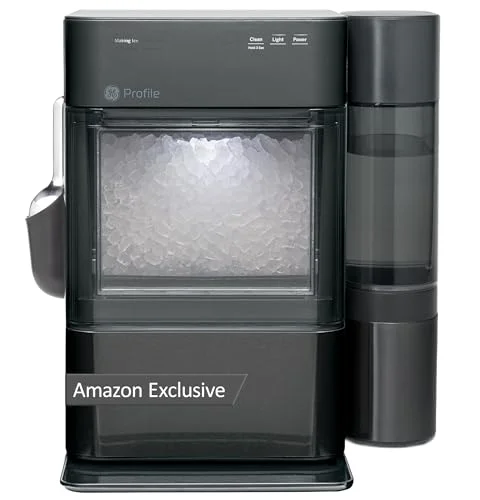
The GE Profile Opal Ultra (ASIN B0GSBJNTXM) is sold as a “WiFi Black Stainless Steel” Amazon Exclusive, with a 1-gallon XL side tank and a stated 38 lbs of ice a day. Read quickly, “black” in that title looks like it's describing the same thing as the plain “Black” finish on the cheaper Silonn above. It isn't. Black stainless steel is an established finish term across the major kitchen-appliance brands — a tinted or coated metal surface, still a sheet of stainless underneath, versus a plain black molded plastic shell on a budget countertop unit. One is a treated metal exterior; the other is colored plastic. Both can fairly be called “black” in a product title, and neither title is lying, but they are not describing the same kind of surface.

That distinction matters beyond semantics. A metal exterior and a plastic one behave differently in the two things people actually care about when they say “finish”: how it feels alongside other appliances, and how it ages. A treated metal shell reads as the more premium surface sitting next to other kitchen hardware, which lines up with the Opal Ultra's position as the most expensive machine in this comparison by a wide margin. We don't have GE's specific cleaning instructions or scratch-resistance figures in the data we're working from here, so we won't invent care advice for the Ultra's exact finish beyond what's checkable: it is categorized and marketed as a distinct, named finish — black stainless steel — not as the same plain black as a budget plastic shell, and the price gap between this machine and either Silonn reflects a lot more than the color of the box. For the fuller case on whether that gap is worth paying, see our look at whether the GE Profile Opal Ultra is worth its asking price.

The practical takeaway: don't assume two listings describe the same material because they use the same color word. “Black” on a budget countertop unit is very likely plastic. “Black stainless steel” on a premium listing is a specific, named metal finish. Check which one a listing is actually claiming before you compare it against a cheaper “black” option on price alone.

What it actually costs

The price difference between finishes: usually none, occasionally real

It's a fair generalization across this category that when two listings are genuinely the same machine in two finishes, the price gap, if there is one, tends to be modest — closer to the cost difference between molding colored plastic and plating or coating a metal shell than to anything resembling a different product tier. Sometimes there's no gap at all and the finish really is a free choice at checkout. Here, there is a real gap: the black Silonn (B0C9SWH3RC) is $159.99, and the stainless steel Silonn (B0DKFRNBTH) is $154.89 — a $30 difference, or about 19% more for the stainless version, on what the listings otherwise describe as the same 36 lbs/24h self-cleaning machine.

That's the honest, occasionally-real version of the pattern described in this guide's own premise: often the same machine ships in both finishes at the same price, but not always, and when it isn't, the gap is usually explainable by the finish itself rather than by a hidden hardware difference. A metal shell generally costs more to produce and finish than an injection-molded plastic one, which is the ordinary, unremarkable explanation for a price difference like this $30 gap — not evidence of a secretly superior machine underneath the stainless version.

The GE Profile Opal Ultra doesn't give us a same-machine, two-finish comparison to make at all: it's sold at this ASIN in exactly one finish, black stainless steel, at $499.00, with no plain-black or plain-stainless sibling listing to weigh it against. For this machine, the finish question doesn't come down to “which is cheaper” the way it does with the Silonn pair — it's simply the one finish GE ships this particular model in. The useful habit either way is the same: before treating a price gap between two similar-looking listings as purely a finish tax, check the full spec line — tank size, stated output, self-cleaning, included accessories — side by side, the way we do for the wider Silonn lineup in our comparison of Silonn against EUHOMY. A matching spec line is what actually tells you the extra dollars bought a shell and nothing else.
Side by side

The three, compared

ModelFinishDaily outputNotable specPriceGet it
Silonn Nugget Ice Maker Black (plastic shell) 36 lbs/24h Self-cleaning function $159.99 Get it
Silonn Nugget Ice Maker Stainless steel 36 lbs/24h Self-cleaning function $154.89 Get it
GE Profile Opal Ultra Black stainless steel 38 lbs/day 1-gallon XL side tank, WiFi $499.00 Get it
The picks

The pick, by the counter it’s actually going on

01Best for a busy counter

Silonn Nugget Ice Maker Countertop, Black

Best if the counter around it is already busy and fingerprints are the enemy

36 lbs/24h·Self-cleaning function·Black plastic shell·Price $159.99

The cheaper of the two Silonn finishes, and the one built to absorb daily contact marks rather than show them. A matte black plastic shell doesn't reflect light the way a brushed metal surface does, so the fingerprints from the lid, the scoop and the start button every time you make ice are far less visible here than on the stainless version next to it. Everything else — the self-cleaning function, the 36 lbs/24h output — reads identically to its stainless sibling, which makes this the straightforward choice if the finish isn't matching anything specific in your kitchen.

Same machine as the stainless version below, thirty dollars less, and it hides the daily touch marks better.

Silonn nugget ice maker in black finish
Price
$159.99
Check price →
02Best to match a stainless kitchen

Silonn Nugget Ice Maker Countertop, Stainless Steel

Best if the rest of your appliances are already stainless and a black box would stand out

36 lbs/24h·Self-cleaning function·Stainless steel shell·Price $154.89

Thirty dollars more than the black version above, for what the two listings otherwise describe as the same machine — same 36 lbs/24h output, same self-cleaning function, same brand language in the title apart from the finish word. What that $30 actually buys is visual consistency next to a stainless fridge or dishwasher, not a different mechanism underneath. The trade-off that comes with it is the one covered above: a reflective metal surface shows fingerprints and smudges more readily than the black plastic version, so expect to wipe it down more often if it's getting daily use.

You're paying for the kitchen to look consistent, not for a better ice maker underneath the shell.

Silonn nugget ice maker in stainless steel finish
Price
$154.89
Check price →
03Best if the finish is a different machine

GE Profile Opal Ultra

Best for a premium counter, where black stainless steel is a named finish, not a plastic color

38 lbs/day·1-gallon XL side tank·WiFi·Black stainless steel, Amazon Exclusive

This is the machine in this comparison where the finish and the product tier move together rather than separately. “Black stainless steel” here describes a treated metal exterior, a genuinely different material from the plastic shell on either Silonn above, sold alongside a gallon-scale side tank and WiFi control that neither cheaper machine offers. At $499.00 it's the most expensive pick by a wide margin, and the honest framing is that you're not choosing a finish on an otherwise identical machine the way you are with the Silonn pair — you're choosing an entirely different machine that happens to come in one specific finish.

Not a color choice on the same box. A different box, in the only finish it's sold in.

GE Profile Opal Ultra in black stainless steel finish
Price
$499.00
Check price →
Our method

How we compared — and what we can’t tell you

What we did

Listing titles, specs and prices, read side by side

We compared the published product names, stated daily output, included features and current Amazon prices for three listings chosen specifically to show both ends of this pattern: two Silonn ASINs that use nearly identical language apart from the finish word, and one GE listing whose finish term, black stainless steel, is not the same material claim as a plain black plastic shell. Where a listing states a spec directly, we report it; where it doesn't, we say so rather than guess.

What we didn’t

We don’t run a testing lab

We do not physically test these machines, we do not own them, and we have not measured fingerprint visibility or scratch resistance ourselves on any of these three ASINs. The points we make about stainless steel showing smudges more readily than matte black, and about black stainless steel being a distinct, named finish from colored plastic, are general, widely documented material facts about these surfaces, not findings from a lab we don't operate. We have no owner reviews or star ratings for these products, so none are cited, paraphrased or implied anywhere above.

FAQ

Common questions

Is the black version of a nugget ice maker always cheaper than the stainless version?

Not always, but it's common, and it's the case in the Silonn pair compared here: the black version is $159.99 and the stainless version is $154.89, a $30 gap on what the listings otherwise describe as the same 36 lbs/24h self-cleaning machine. Where a price gap exists between two same-brand listings that differ only in finish word, it's usually explained by the cost of plating or finishing a metal shell versus molding colored plastic, not by a hidden difference in the mechanism.

Does stainless steel really show more fingerprints than black plastic?

Yes, as a general and well-established property of the two materials. A brushed or polished metal surface reflects light unevenly where skin oil sits on it, making smudges visible at an angle; matte black plastic absorbs light more evenly and hides the same contact marks far better. On a countertop nugget ice maker specifically, this matters more than it would on an appliance you touch rarely, because the lid, scoop and buttons get handled every time you make ice.

Is GE's “black stainless steel” the same material as a black plastic ice maker shell?

No. Black stainless steel, the term GE uses for the Profile Opal Ultra, describes a tinted or coated metal surface, still stainless steel underneath; a plain “Black” finish on a budget countertop machine like the cheaper Silonn listing is molded black plastic. Both are fairly described as “black” in a product title, but they are not the same kind of surface, and they don't behave the same way in terms of how they read next to other appliances or how they age.

If two listings are identical except for the finish word, is it safe to assume they're the same machine?

It's a strong signal, not a guarantee. When a brand's two listings use nearly identical titles and specs apart from the color, like the two Silonn ASINs compared here, the simplest and most likely explanation is one mechanism in two shells. It isn't universal, though — always check the full spec line, not just the headline photo and price, since a seemingly cosmetic difference between two listings can occasionally sit alongside a genuine hardware change you wouldn't catch from the title alone.