Best Nugget Ice Makers
Office & Small-Business Buying Guide · Countertop Nugget Ice Makers

Three people share a machine. Ten people share a problem.

A nugget ice maker on a home counter gets refilled by whoever's thirsty and cleaned by whoever remembers. Put the same machine on a break-room counter and both of those jobs lose their owner, right as the number of hands reaching for the scoop triples or quadruples. We compared the published specs and current Amazon prices on three countertop nugget makers against the specific demands of a shared office counter: output, visibility, and who's actually responsible for it.

By Ilane Tall3 picks sized for a shared counterResearch-based — no testing lab, no invented scores

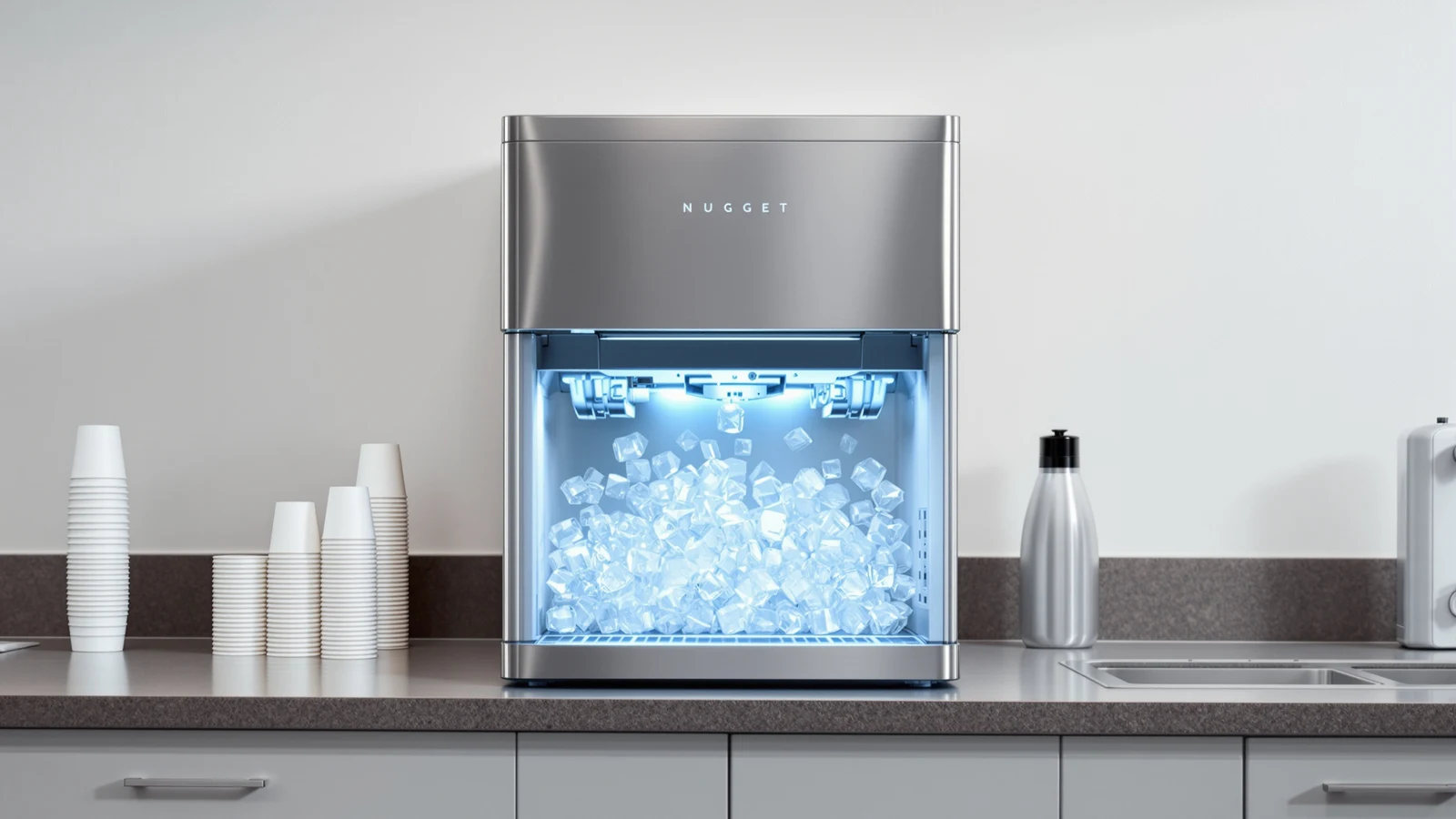
Countertop nugget ice maker with a viewing window on a break-room counter beside stacked disposable cups
Affiliate disclosure: we may earn a commission if you buy through the Amazon links on this page, at no extra cost to you. See how we picked below.

Every guide to nugget ice makers, including the main comparison on this site, is written around a kitchen with one or two regular users. An office break room, a small clinic waiting area, a salon, a real-estate branch with a client lounge — those are a different buying problem wearing the same specification sheet. The machine itself doesn't change: it's still a countertop compressor unit that chills water into soft, chewable pellets and holds a few pounds of it in a bin that melts back into the reservoir when nobody's drawing from it. What changes is everything around the machine — who notices it's empty, who's willing to open it up and clean it, and whether the people walking past it can tell at a glance whether it's worth stopping for.

This guide covers three machines that fit a shared counter without asking for an installer or a water line: the Crzoe Nugget Ice Maker Countertop, rated at 35 lbs of ice per day; the SenCre Nugget Ice Maker, rated at 40 lbs per day; and the Frigidaire Nugget Ice Maker with a transparent window, rated at 44 lbs per day. We compared what each listing actually states about output, fill tank, self-cleaning and visibility, and we're explicit below about the one thing none of these listings can tell you: how your specific office will use the machine once it's plugged in.

What changes

What changes when ten people use the machine instead of three

A household of three has an informal but real feedback loop: someone fills the tank, someone eventually notices it's getting low, and the group is small enough that responsibility circulates without anyone assigning it. Scale that same machine up to ten, fifteen or thirty people drawing from a single break-room unit, and that feedback loop breaks. Nobody owns the tank by default, because everybody assumes somebody else does. The practical result, reported consistently wherever shared-appliance habits get discussed, is that a shared machine runs dry more often than a household one of identical capacity — not because the ice maker is worse, but because the informal maintenance a small household provides for free doesn't scale with headcount.

The same math runs the other way for wear. Three people open a lid, scoop ice and close it a handful of times a day. Ten or more people doing the same thing turns a gentle daily routine into something closer to continuous light use, concentrated into the hours a break room is actually busy — late morning, right after lunch, mid-afternoon. None of the three machines in this guide publish a duty-cycle rating or a commercial-use warranty distinct from their stated daily output, so we're not going to invent one. What we can say plainly, because it follows from the mechanism rather than the marketing copy, is that a machine rated for a given number of pounds in 24 hours under light home use is being asked something different when that same 24 hours compresses most of its draws into a six-hour office window.

The honest takeaway isn't that any specific model here is unfit for an office — it's that the usual home-kitchen shorthand of "biggest lbs/day number wins" undersells two things that matter more on a shared counter: how visible the machine's status is to people who don't own it, and how little friction there is in keeping it running without a single assigned owner. That's the lens the rest of this guide uses.

Visibility

Why a viewing window matters more on a shared counter

In a home kitchen, lifting the lid to check the bin costs nothing — it's your machine, your counter, and you already know roughly how much ice is in there because you made the last batch. On a shared counter, lifting the lid is a small social cost that a surprising number of people quietly decide isn't worth paying. They don't know if the last person left the lid seated properly, whether there's a "please descale before Friday" sticky note under it, or whether opening an appliance that isn't theirs is something they're supposed to do at all. The net effect: people walk past a machine that's actually fine, assume it's empty or broken because they can't tell from a glance, and either give up on ice or go looking for a kettle and a tray instead.

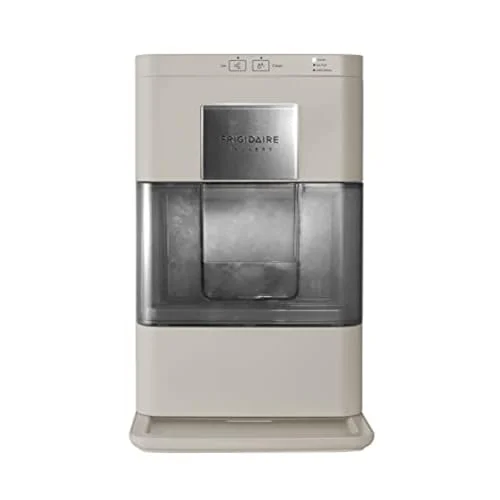
This is exactly the gap a transparent window closes. The Frigidaire Nugget Ice Maker in this guide is built with one — its listing title specifically calls out the "Transparent Window" — and the practical effect is that anyone walking past can see the ice level without touching the machine at all. On a counter three people share, that's a nice-to-have. On a counter ten or thirty people share, it's the difference between the machine getting used continuously through the day and it getting silently written off by midmorning because nobody could tell from across the room whether there was anything in the bin.

Neither the Crzoe nor the SenCre listing in this guide advertises a viewing window, so we're not assuming one exists on either machine; if that's a requirement for your space, the Frigidaire is the pick that states it outright, not the one you'd have to guess about from a product photo.

Capacity

Daily output against a break room's actual demand curve

The three machines here are rated, per their own listings, at 35 lbs a day (Crzoe), 40 lbs a day (SenCre) and 44 lbs a day (Frigidaire). Those numbers describe the same thing the home-kitchen guides describe: output sustained over a full 24-hour cycle with the reservoir kept topped up. An office break room doesn't draw ice in a flat line across 24 hours — it draws almost nothing overnight and on weekends, then concentrates most of a week's demand into a handful of daytime hours. That means the daily-output number on the box is a reasonable way to compare these three machines against each other, but a poor way to guess whether any one of them will keep up during a Tuesday lunch rush, because none of their listings states a sustained hourly rate we can respon­sibly repeat here as a guarantee.

What the listings do state, and what matters more for this particular use case, is how quickly each machine produces its first batch and how it handles continuous runs between refills. The Crzoe states a first batch in 6 to 7 minutes from a 1.1-litre water tank. The SenCre states first ice in about 5 minutes from a 1-litre tank. The Frigidaire states first ice in 10 to 15 minutes; its listing doesn't give a tank volume we can cite, so treat that figure as unstated rather than assume it matches either of the other two. A smaller tank refilled more often is not automatically worse in an office setting — it just shifts the job from "one big top-up" to "several small ones," which only works if somebody is actually doing them.

Our guide to running cost and noise breaks down what continuous operation costs in power and decibels if a shared unit is going to run through most of a working day rather than the occasional home-evening stretch these daily-output figures are usually quoted against.

Ownership

Who refills it, and why that question needs an answer before you buy

None of the three machines in this guide plumb into a water line — they're all countertop units you fill by hand, the same as every home nugget maker on this site. That's a feature in a kitchen and a potential liability in an office, because "fill it by hand" quietly assumes a hand that's going to do it. Before any of these machines gets ordered for a shared space, the more useful question than "which one makes the most ice" is "whose job is it to pour water into the tank on a Monday morning, and what happens on the Friday they're out sick?"

This isn't a hypothetical. It's the single most common reason a perfectly capable shared appliance — a coffee machine, a water cooler, an ice maker — ends up unplugged in a storage closet within a year: not because it broke, but because the informal arrangement that kept it filled depended on one specific person who eventually left, got busy, or simply got tired of being the only one who ever did it. A smaller tank like the SenCre's 1 litre or the Crzoe's 1.1 litres means more frequent trips to the sink; a machine without a stated tank volume, like the Frigidaire here, means you should ask the seller or check the listing's own specification table rather than assume a figure we don't have on file.

The practical fix costs nothing and isn't optional: before the machine ships, decide who's filling it and put that decision somewhere other than a group chat that scrolls away. Facilities, office management, whoever restocks the coffee station — anyone works, as long as it's a named role rather than a hope. Our buying guide covers this same ownership question for any nugget ice maker purchase, shared or not, and it's worth reading in full before the order goes in.

Side by side

The three, compared

ModelBest forDaily outputNotable specPriceGet it
Frigidaire Nugget Ice Maker A shared counter nobody has to open 44 lbs/day Transparent window, auto self-clean $220.14 Get it
SenCre Nugget Ice Maker Balancing output and price 40 lbs/day 1 L tank, first ice in 5 min $219.99 Get it
Crzoe Nugget Ice Maker A small team on a tighter budget 35 lbs/day 1.1 L tank, 15-min self-clean cycle $139.99 Get it
The picks

Our picks, and who each one is for

01Best for a shared counter

Frigidaire Nugget Ice Maker with Transparent Window

Best for a counter nobody wants to have to open

44 lbs/day·Transparent window·Auto self-cleaning·First ice in 10–15 min, compact size

The highest stated daily output of the three, and the one spec that matters most for a break room: a transparent window built into the unit, named outright in Frigidaire's own listing title, so anyone walking past can see the ice level without touching it. Frigidaire states up to 44 lbs a day with first nuggets ready in 10 to 15 minutes, and lists an auto self-cleaning function alongside a compact footprint the brand says fits under a cabinet. This is this generation's 2.0 version, in a cream finish. The listing doesn't state a water tank volume, so if that's a deciding factor for how often someone needs to top it up, confirm it on the product page rather than assume a figure we don't have on file.

The window does the job a sign on the wall can't: it tells people the machine is working before they bother to check.

Frigidaire nugget ice maker with transparent window
Price
$220.14
Check price →
02Best balance

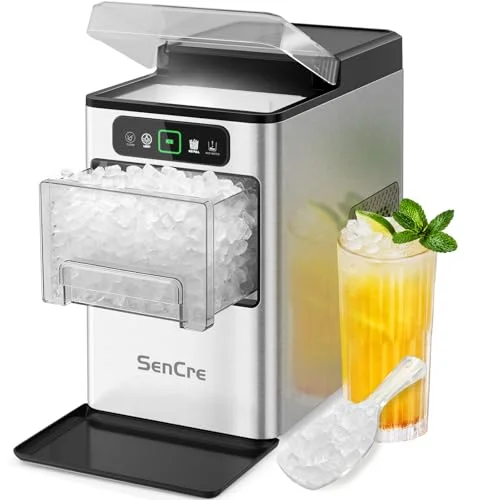
SenCre Nugget Ice Maker 40lbs/Day Countertop

Best for balancing output and price

40 lbs/day·1 L water tank·First ice in 5 min·Self-cleaning function, stainless silver finish

SenCre states 40 lbs of ice per day from a 1-litre tank, with first batch ready in about 5 minutes — the fastest stated time to first ice of the three machines here. It sits between the Crzoe and the Frigidaire on both price and output, and its listing calls out a self-cleaning function triggered by a button press, which matters for a shared machine that's going to get descaled on somebody's schedule rather than whenever it feels due. The 1-litre tank is on the smaller side, which means more frequent refills than a bigger reservoir would need — worth weighing against whoever's been assigned that job.

A sensible middle ground: more output than the cheapest option here, a lower price than the one with the window.

SenCre nugget ice maker countertop
Price
$219.99
Check price →
03Best for a small team

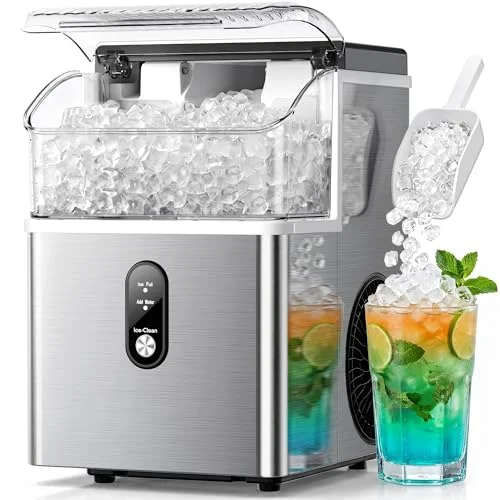
Crzoe Nugget Ice Maker Countertop

Best for a small team on a tighter budget

35 lbs/day·1.1 L water tank·First ice in 6–7 min·15-minute self-clean cycle, silver finish

The lowest price and the lowest stated daily output of the three, at 35 lbs a day from a 1.1-litre tank. For a smaller office or a team of three to six people, that's not a shortfall — it's a machine sized closer to the demand it'll actually see, at a price that's easier to justify if nobody's sure yet whether a shared ice maker is going to earn its counter space. Crzoe's listing states a self-cleaning cycle started by holding a button for five seconds, running about 15 minutes. It's the pick for a smaller group willing to accept more frequent tank refills in exchange for spending the least up front.

Right-sized for a small team, not a scaled-down version of the bigger machines — just a cheaper way to find out if a shared machine gets used.

Crzoe nugget ice maker countertop
Price
$139.99
Check price →
Maintenance

Where a shared machine still needs a posted cleaning schedule

A self-clean cycle is a button, not a policy. All three machines in this guide list one — Crzoe's runs about 15 minutes after holding the button for five seconds, SenCre's starts with a single press, and Frigidaire's is described as automatic self-cleaning — and in every case, the cycle cleans the machine's internal path, not the scoop sitting in a communal drawer, the counter around the bin, or the lid a dozen different hands have touched since the last wipe-down. Our guide to what the self-clean cycle actually does covers the gap between that button and an actual descale in detail, and it applies to every machine on this page exactly as it does in a home kitchen.

What's different in an office is that nobody's personal sense of "this seems due for a clean" is going to trigger that button reliably across ten or thirty users with no assigned owner. The fix is the same one that solves the refill problem: a posted schedule, taped to the wall or the side of the machine, naming a day of the week and, ideally, a name. It doesn't need to be elaborate — a sticky note that says "descale cycle: every Monday, ask facilities" does more for a shared ice maker's lifespan than any spec on this comparison table. Nugget ice makers recirculate the same water continuously, so scale buildup is a matter of when, not if, and a machine shared by more people produces more condensation, more spills, and more reasons for that schedule to slip if it isn't written down somewhere everyone can see it.

Our method

How we picked — and what we can’t tell you

What we did

Listing data, read for a shared counter

We compared the published daily output, water tank size, time to first ice, self-cleaning claims and current Amazon prices for three countertop nugget ice makers, then read each listing specifically for the two things that matter most once a machine is shared rather than personally owned: how visible its status is without opening it, and how it handles cleaning between uses. Where a listing states a spec directly, like the Frigidaire's transparent window or the SenCre's 1-litre tank, we report it. Where it doesn't, as with the Frigidaire's tank volume, we say so.

What we didn’t

We don’t run a testing lab

We do not physically test these machines, we do not own them, and we do not publish invented scores, ratings or review counts. Nobody credibly runs a nugget ice maker in an actual break room for a year to report back on it. What we can do honestly is read each manufacturer's own claims, set them against the specific demands of a shared counter — visibility, refill frequency, cleaning ownership — and be explicit about which figures are published specifications and which are simply absent from the listing.

FAQ

Common questions

How many people can one of these machines actually support?

None of the three listings state a recommended headcount, and we won't invent one. What we can say is that a machine rated for a given daily output under steady home use is being asked something different when most of that output gets drawn in a concentrated daytime window by a shared group, as happens in a break room. For a small team of three to six, the Crzoe at 35 lbs a day is sized reasonably. For a busier counter with ten or more regular users, the SenCre or the Frigidaire's higher stated output gives more headroom, though neither listing guarantees performance under office conditions specifically.

Why does a viewing window matter more in an office than at home?

At home, checking the ice bin costs nothing because it's your machine. On a shared counter, lifting a lid that isn't yours is a small social friction a surprising number of people avoid, so they assume the machine is empty or broken rather than check. The Frigidaire Nugget Ice Maker in this guide states a transparent window outright in its listing title, letting anyone see the ice level at a glance. Neither the Crzoe nor the SenCre advertises this feature, so don't assume either one has it.

Who should be responsible for refilling a shared nugget ice maker?

Someone named, not someone assumed. All three machines here are countertop units filled by hand — none plumb into a water line — which works fine in a home with one or two regular users and tends to fail quietly in a shared space once that responsibility isn't assigned to anyone specific. The fix costs nothing: decide who fills it, whether that's facilities, office management or whoever restocks the coffee station, before the machine ships.

Does a shared ice maker still need a posted cleaning schedule?

Yes, and more than a single-household machine does. All three machines list a self-clean cycle, but that cycle cleans the internal water path, not the scoop, the counter, or the lid that a dozen different hands touch between cleanings. A posted schedule naming a day and a person — even a simple sticky note on the machine — does more to keep a shared unit descaled and sanitary than relying on any individual user's judgment that it "seems due."